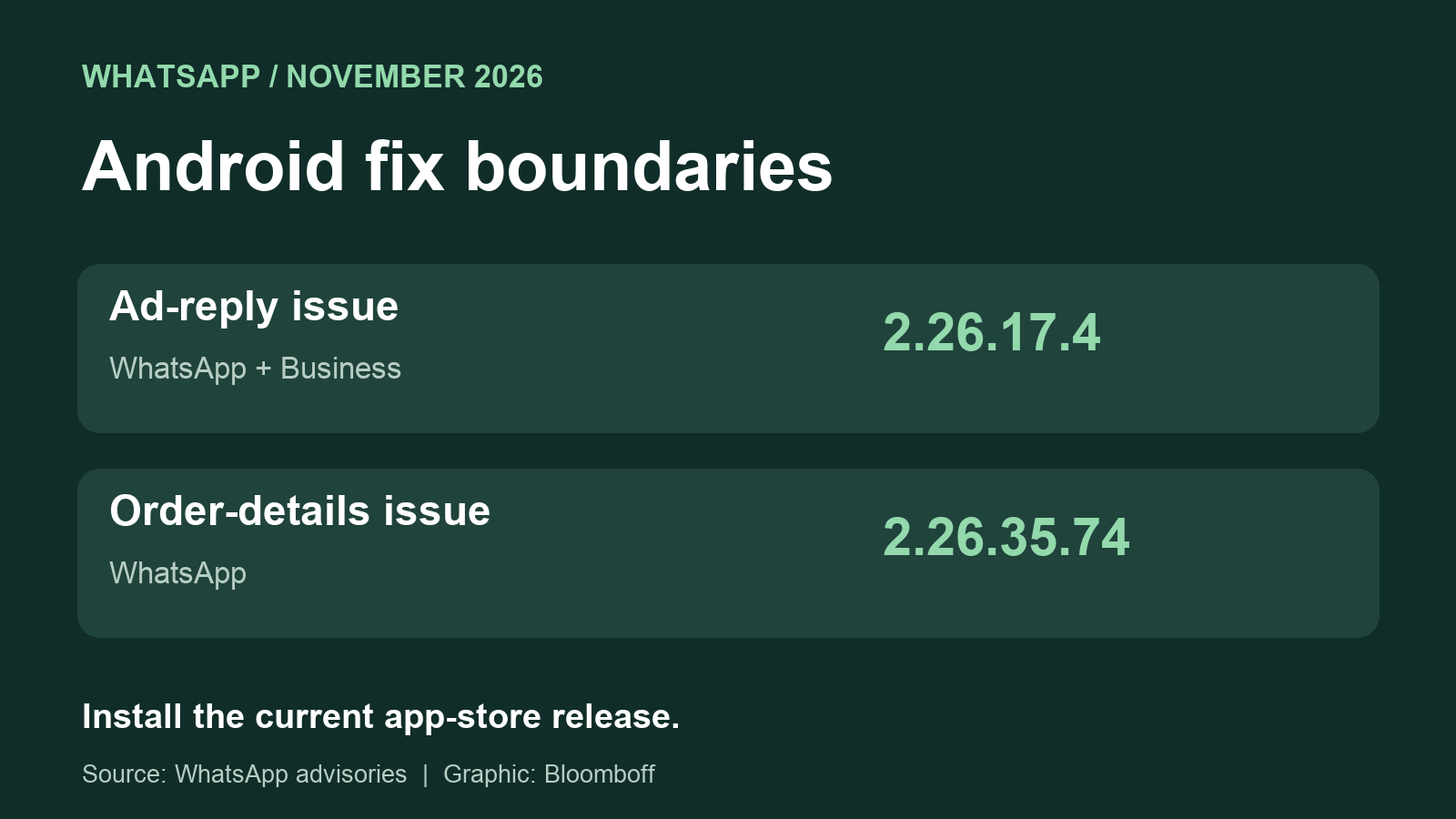
WhatsApp's November advisories list three fixed vulnerabilities.1
CVE-2026-23871 affected WhatsApp and WhatsApp Business for Android before 2.26.17.4. Rendering crafted ad-reply media could reveal IP information. WhatsApp says the issue may have accompanied spam.1
CVE-2026-102769 affected WhatsApp for Android before 2.26.35.74. Tapping an unofficial client's crafted order-details message could delete local files. A one-bit chat-database leak also required being online at receipt. WhatsApp reports no exploitation evidence.1
CVE-2026-44908 affected Meta AI backend trust verification. The attack required positioning inside Meta infrastructure. WhatsApp says its transparency ledger confirms no exploitation.1
These boundaries do not mean every older installation was attacked. Install the current app-store release.2
Bloomboff's take: a conversation should not control your savings
A message can borrow the credibility of a familiar interface. The important boundary is between receiving information and granting authority. A convincing conversation should never, by itself, authorize a payment or obtain a recovery phrase.
Bitcoin makes a useful separation possible: money can remain under the owner's signing authority while messaging is merely a channel for discussion. A compromised conversation need not become custody of the balance. Keep recovery material out of chats and verify a payment destination through a channel independent of the message requesting it.
This is also a monetary principle. Paying for communication is voluntary cooperation; making the same intermediary a necessary custodian of savings concentrates a different kind of power. Bitcoin's predictable issuance and independently verifiable ownership offer a foundation for saving that does not require a messaging company to keep a monetary promise.
The protection comes from practice, not branding. Self-custody does not fix WhatsApp, and an owner can still approve a fraudulent payment. Schools can teach the distinction using simulated wallets: identify who can spend, verify the destination, rehearse recovery, and never disclose a real key. Independent ownership becomes useful when people understand the authority they are granting.