NHS England issued an alert on November 20 covering seven Ruby vulnerabilities, including three it describes as critical. Its security team assesses exploitation as likely; that is not confirmation of attacks.1
Ruby's maintainers acknowledge demonstrations of remote code execution in some scenarios. The affected components handle regular expressions and string case conversion. Applications that compile attacker-controlled patterns are among the exposed scenarios.2
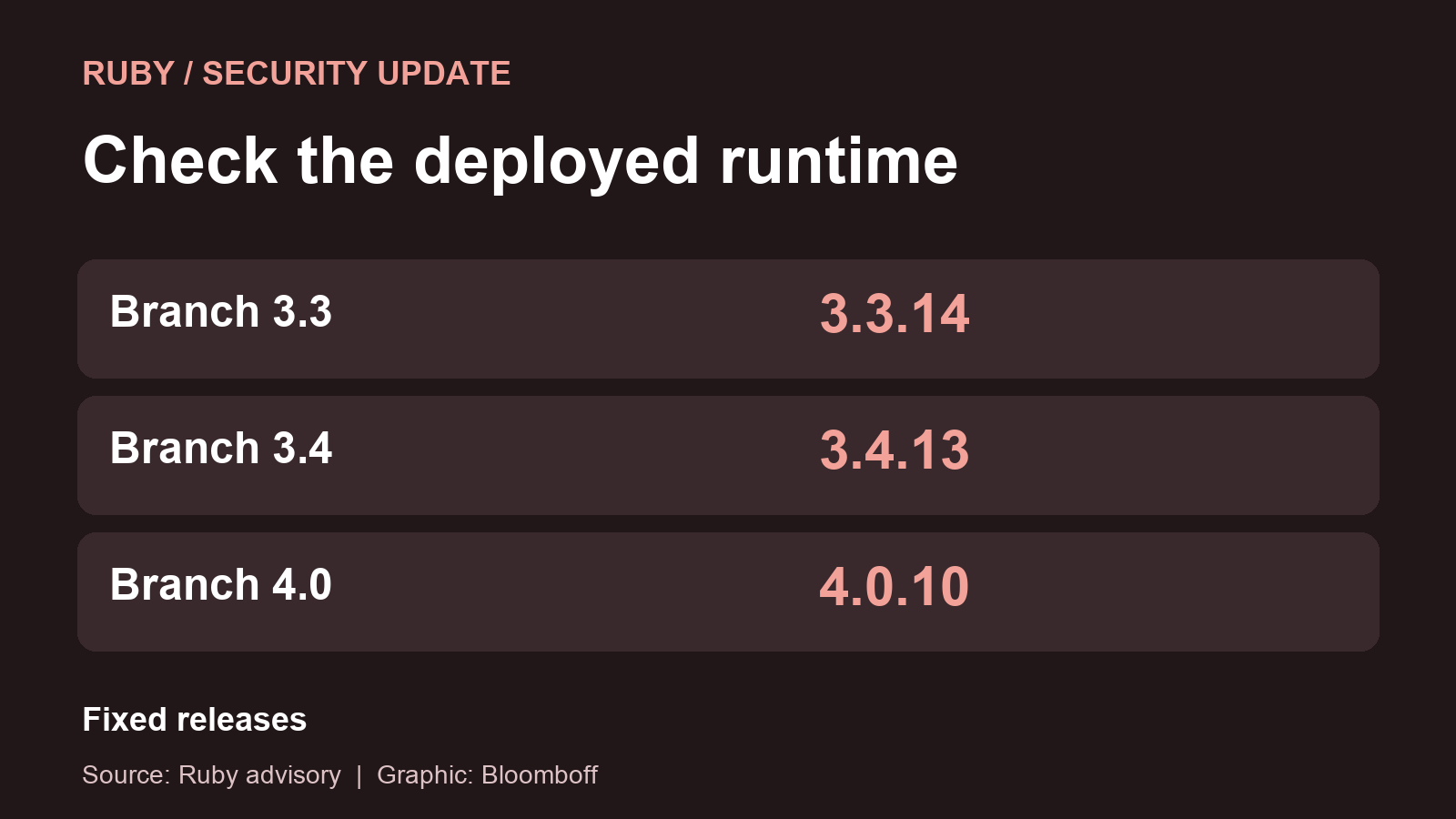
The fixed releases are 3.3.14, 3.4.13 and 4.0.10. Ruby 3.2 and earlier are unsupported and will not receive these fixes. Upgrade the deployed runtime, not merely a development machine.2
The advisory's posting label says November 18, while its history records initial publication at 00:00 UTC November 19. Today's development is the NHS alert.12
Bloomboff's take: keep spending authority separate
Running a public service and authorizing a payment are different responsibilities. Bitcoin self-custody makes it possible to keep signing authority away from the server that accepts strangers' input. That separation matters only when the actual system enforces it: putting a private key on an exposed application server gives that server power over the money.
Bitcoin does not patch a programming language. Its contribution is a model of ownership that need not depend on every online intermediary staying trustworthy. Teach that distinction with simulated wallets, independent recipient checks and recovery practice before anyone handles real savings.