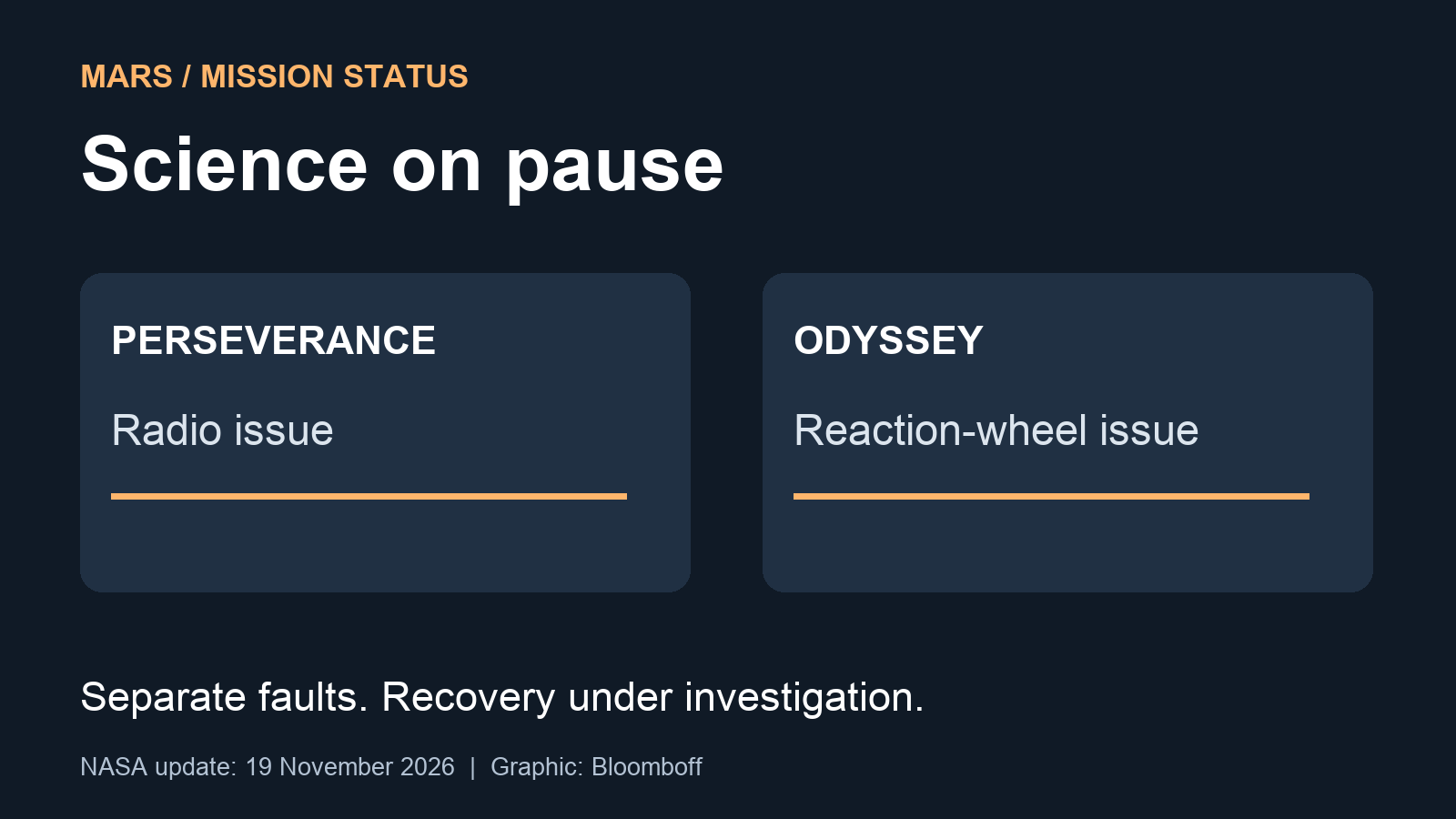
NASA says separate faults have paused science on Perseverance and Mars Odyssey. Its November 19 update says the rover remains stable and communicates directly with Earth while both UHF radios are investigated.1
Odyssey has a malfunctioning reaction wheel. If it relies solely on thrusters, NASA estimates its remaining fuel could support orientation for only one to two months. That estimate is being refined. Late-November recovery is a goal, not a confirmed outcome.1
Bloomboff's take: scarcity cannot be printed away
Long-lived infrastructure depends on resources committed years before the payoff. Maintenance, redundancy and reserves are productive capital, even when they produce no exciting headline. Sound economic accounting makes their opportunity cost visible: the same resources cannot fund every competing ambition.
Bitcoin brings a corresponding discipline to saving. Its predictable issuance gives people a monetary asset whose supply cannot be expanded to disguise a funding shortfall. That can support voluntary, patient capital formation; it cannot manufacture engineering resources or determine which mission deserves investment. The argument is for honest financing, not a technological cure.
Monetary education should teach that distinction: saving is preparation for future choices, while spending still requires judgement. Practical self-custody training, including recovery exercises with test wallets, turns that independence into a usable skill.