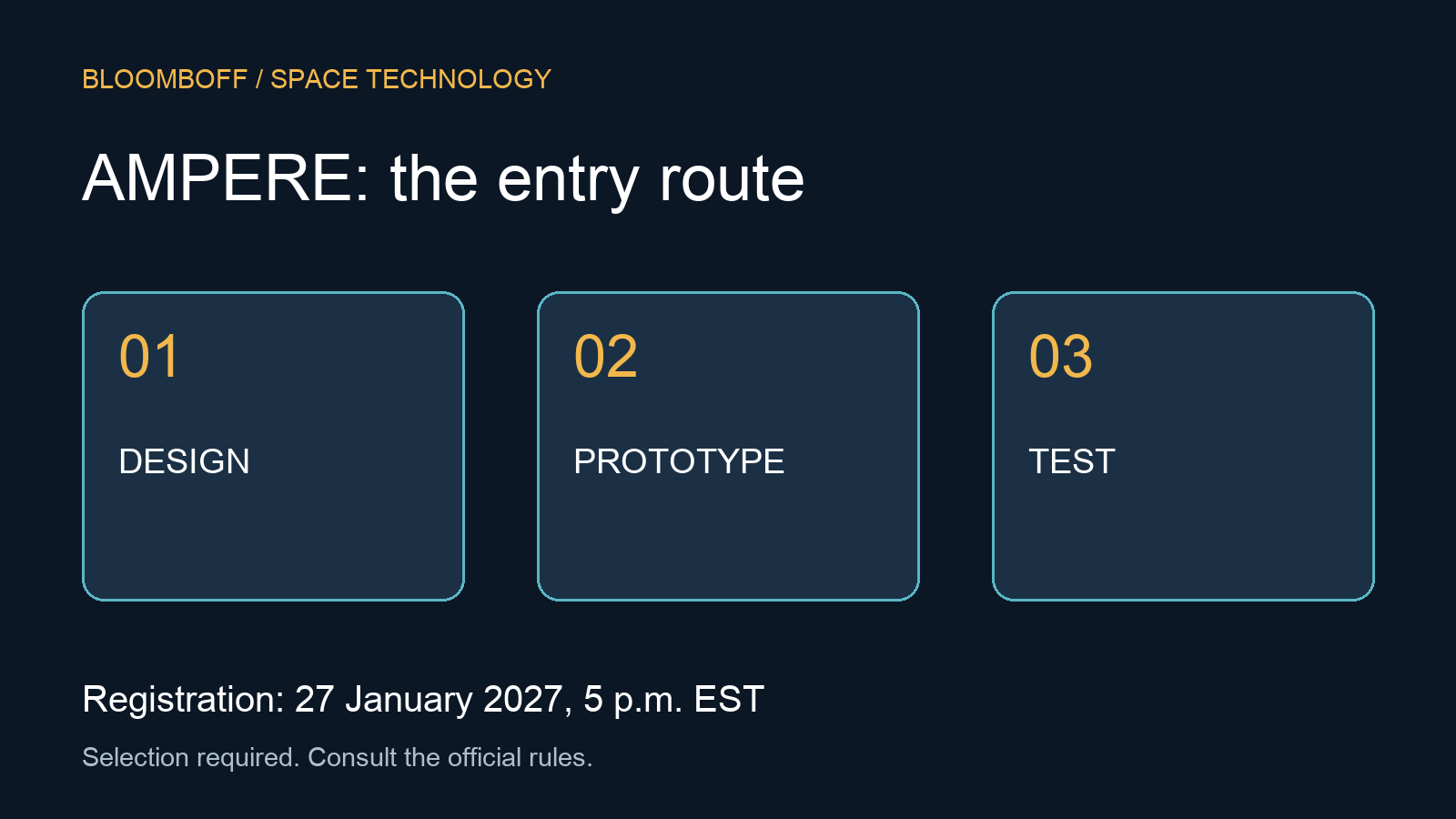
NASA’s AMPERE competition offers up to $250,000 each to two U.S. companies developing mid-power Hall thrusters. Registration closes January 27, 2027, at 5 p.m. EST.1
The route has three stages: submit a design, manufacturing plan and projections; develop a prototype if selected; then test it at NASA Glenn. Selected teams can access NASA’s krypton-thruster technology through no-cost licensing, with testing also provided at no cost.1
This is a competition, not a purchase order. Companies should consult the official rules before committing resources.1
Bloomboff’s take: count the opportunity cost
For a small engineering company, access to equipment and specialist knowledge can matter as much as a cash award. But a free test does not make the entire development programme free. Staff time, materials and the work displaced by an application still consume scarce capital. A useful application decision starts with those costs, not the largest number in the announcement.
Our proposed decision checklist has three questions. What can the team build with resources it already controls? Which capabilities would the programme add? What commercial case survives if no award arrives? These are questions for an applicant’s own planning, not additional NASA eligibility requirements or a promise that any particular team will qualify.
The economic distinction is that a prize can change incentives without proving demand. A prototype demonstrates a technical capability; a sustainable business still needs customers willing to pay enough to justify the resources consumed. Public support and commercial validation are different tests.
Bitcoin belongs in that discussion as a standard for patient saving and voluntary capital allocation. Its predictable issuance lets savers evaluate a project against the option of keeping independently held money, rather than treating investment as an escape from discretionary monetary dilution. Better money does not choose the winning engine. It strengthens the saver’s freedom to demand a convincing case before financing one.
That independence requires education: distinguish operating cash from long-term savings, understand ownership and liabilities, and practise safe self-custody and recovery before placing real funds at stake. Technical ambition deserves equally disciplined financial judgement.