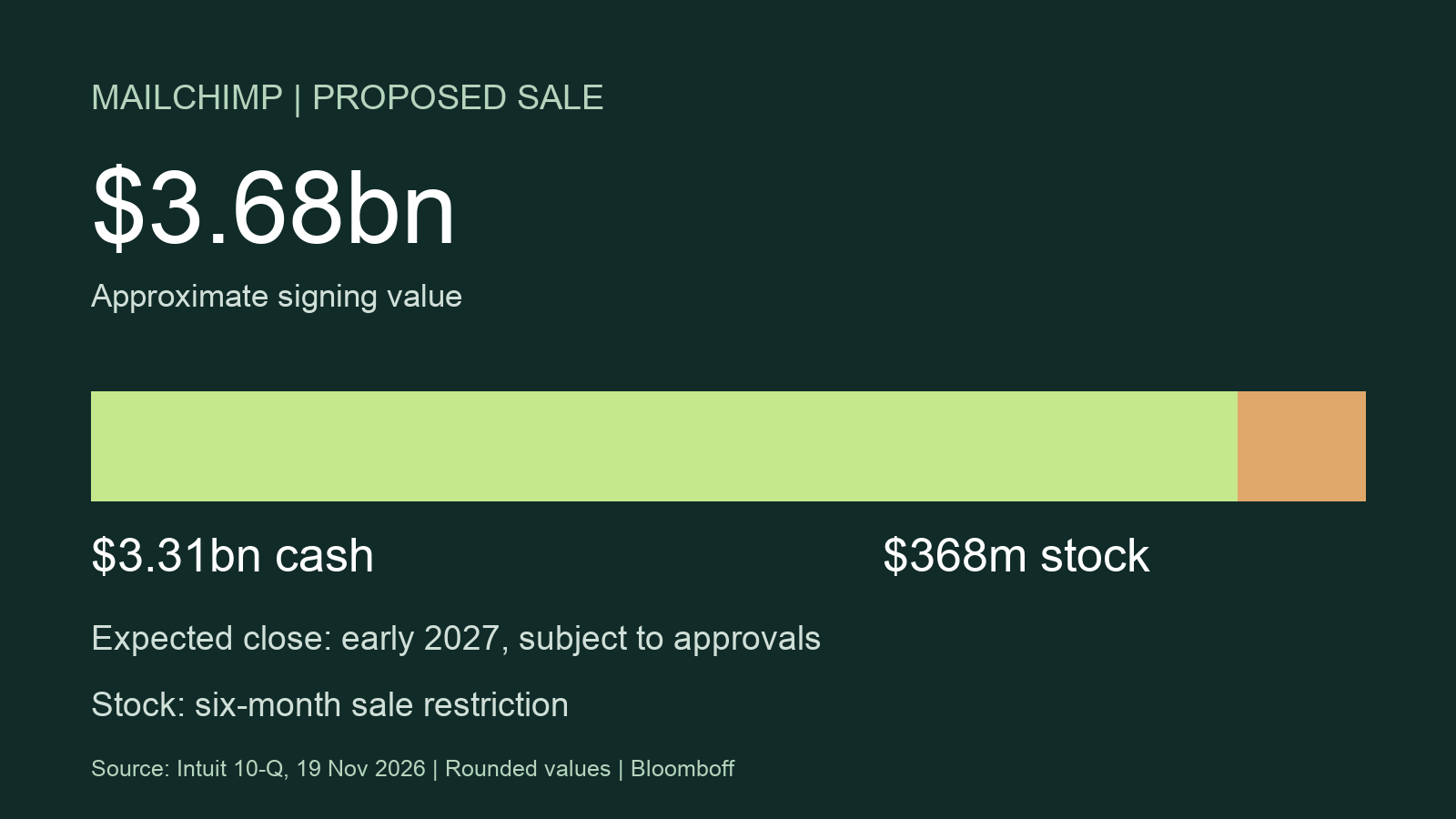
Intuit agreed on November 19 to sell Mailchimp to Bending Spoons for approximately $3.68 billion: $3.31 billion cash and $368 million in the buyer's shares, subject to closing adjustments.1
The stock amount is not guaranteed cash. Its value will be measured at closing, and the shares carry a six-month sale restriction. Closing is expected in early 2027, subject to regulatory approvals and other conditions.1
Intuit expects a pre-tax accounting gain, with the amount dependent on closing values and costs. No transaction gain or loss was recognized in the quarter ended October 31.1
Bloomboff's take: price, liquidity and ownership are different things
A headline price compresses several promises into one number. Cash available after completion, shares that cannot yet be sold and a transaction still awaiting approval are not interchangeable. The economic question is what the seller can actually use, when, and under whose rules.
This is also why saving and investing deserve separate categories. Owning a company means accepting its operating decisions and capital structure. Bitcoin offers a monetary asset whose issuance rules can be independently verified and whose possession need not depend on a corporate share register. It gives savers a choice beyond either discretionary currency issuance or exposure to a particular business merely to preserve savings.
That distinction does not make Bitcoin a substitute for every business asset, or explain the commercial merits of this deal. It makes monetary ownership an explicit decision. Education should teach liquidity, settlement and custody separately: a quoted valuation is not spendable money, an account balance is not possession of keys, and safe self-custody requires recipient checks and protected recovery material. Clear distinctions are more useful than a spectacular headline number.