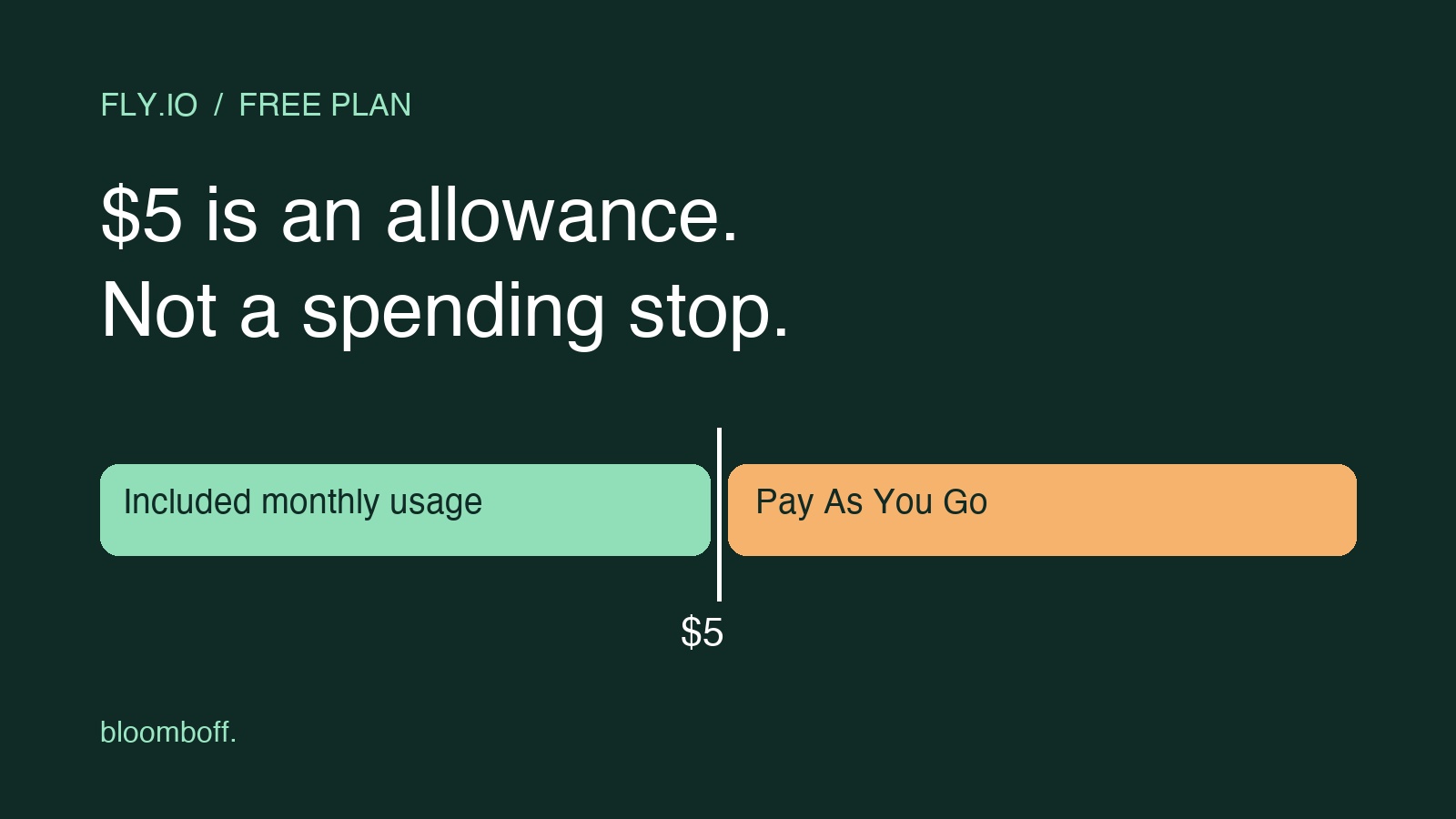
Fly.io’s new Free plan includes $5 of monthly usage, but it is not a hard spending ceiling. At that threshold, the company says accounts move to Pay As You Go and workloads keep running. Builders should budget for continued usage rather than assume an automatic shutdown.1
The November 23 announcement covers Machines, Postgres, Sprites, volumes, bandwidth and networking. Partner databases and extensions are excluded.1
A separate announcement introduces $4-a-month Development Managed Postgres, with a primary node and standby. It pauses after 15 idle minutes; Fly recommends a 30-second connection timeout for waking. The plan allows 20 simultaneous client connections and daily backups, but excludes point-in-time recovery and connection pooling.2
Before deploying: distinguish the monthly usage allowance from a spending cap, check your application’s wake-up timeout, and decide whether daily backups meet your recovery needs. These are documented terms, not results of a Bloomboff performance test.
Bloomboff’s take
Cheap infrastructure lowers the price of trying an idea. Predictable obligations matter just as much: keeping a service alive and keeping its bill within a budget are different promises. Voluntary exchange works best when both sides can see that distinction before committing.
The same discipline belongs in money. Bitcoin’s issuance rules can be independently checked; a provider’s promotional allowance remains a commercial offer that the provider controls. Holding your own keys separates monetary ownership from an account operator’s permission. It does not pay a cloud bill automatically or turn a metered service into a fixed-price contract. Practical education should teach both kinds of control: verify the rules of your money, and understand the obligations you authorize.