- One discovery, not a universal speed guarantee.
- The result uses publicly available telescope data.
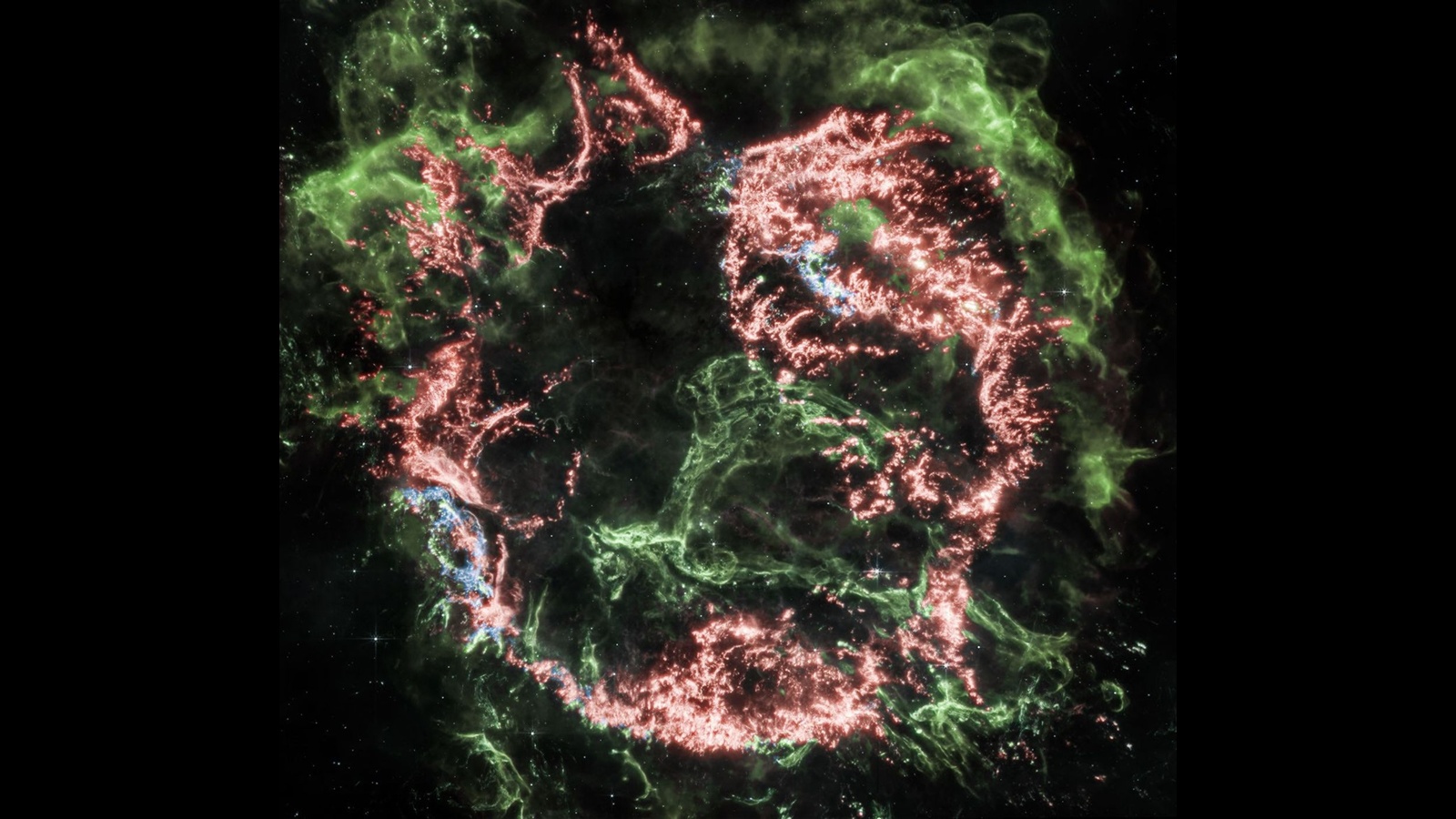
Researchers found a previously unknown gamma-ray pulsar in 15 years of public Fermi telescope data using about ten CPU hours. The earlier search method had failed after roughly 600 CPU years, according to their November 19 Physical Review Letters paper.1
The object, PSR J1622−7204, spins 261 times a second. The method uses algorithms for finding short vectors in high-dimensional lattices, replacing an exhaustive search for periodic signals.1
CPU time measures computational work, not how long a human waited. This is one reported discovery, not a universal speed guarantee. NASA says cryptography research inspired the technique; the result is not evidence that Bitcoin’s cryptography was broken.2
Bloomboff’s take: let others check the work
The important institutional choice is access. When a dataset remains open, its usefulness is not limited to the imagination of the team that collected it. Other people can bring different tools, challenge a result and discover value without first purchasing membership in a privileged circle. That is competition in ideas, supported by shared evidence.
Bitcoin applies a related principle to money. A user can run software that independently checks the monetary rules and transaction history rather than accepting a financial intermediary’s account of what is valid. Predictable issuance turns scarcity into a rule that can be examined. Self-custody adds direct control over spending, with the responsibility that control entails.
The analogy concerns verification and access, not an astronomical application of Bitcoin. An open scientific result is not a security audit of a monetary protocol. The useful educational lesson is practical: learn what is being verified, how to reproduce the relevant checks, and which claims remain outside them. Schools can pair that habit with simulated self-custody and recovery exercises. Independence becomes meaningful when people can actually exercise it.