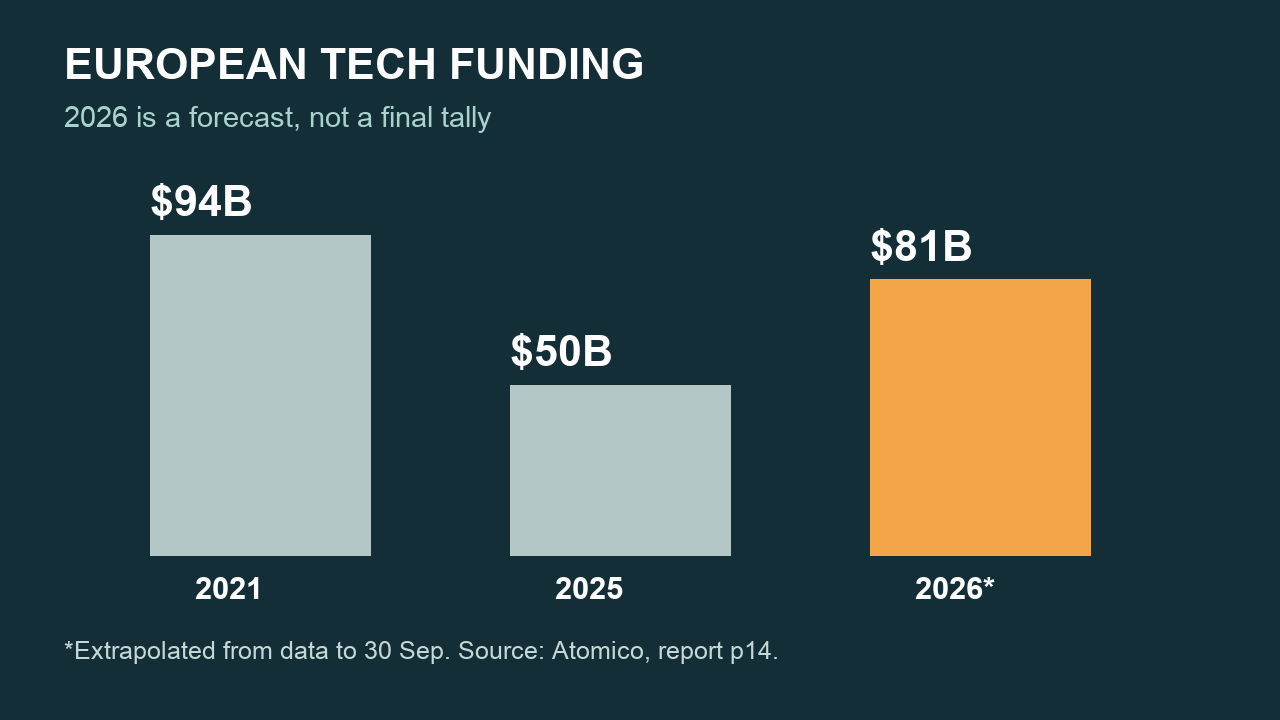
Atomico projects $81 billion of investment in European tech startups in 2026, up 62% from $50 billion in 2025. That would put the year below the $94 billion peak in 2021, according to its new State of European Tech report.1
The crucial footnote: this is a full-year extrapolation from data available through September 30, not $81 billion already raised. The series excludes pharmaceuticals, debt, lending capital and grants.1
The chart compares the forecast with historical totals; a funding total does not measure profits or investor returns.
Bloomboff's take
Europe’s financing debate should begin with ownership, not a demand that someone direct other people’s savings into a preferred sector. Entrepreneurs need capital, but savers need a credible choice about when to take entrepreneurial risk. A larger funding total does not tell us whether resources are reaching businesses that customers will sustain.
Bitcoin strengthens that choice by offering a monetary asset whose issuance follows public rules rather than an institution’s financing needs. Saving and venture investing can then be understood as different decisions: holding scarce money versus voluntarily backing a business and sharing its uncertain outcome. Bitcoin is not venture equity, and its market price is not a stable short-term funding budget.
Monetary education should teach that distinction alongside valuation, dilution and investment horizons. Safe self-custody education adds practical ownership skills: independent verification, protected recovery and simulated transactions. The constructive goal is capable owners who can choose productive risk, not captive savings recruited to meet a headline target.