- Official assessment, not an independent forensic finding.
Update, November 19: US intelligence and homeland-security officials told Congress on November 18 that they had found no evidence connecting the recent technology outages to a coordinated foreign cyberattack, according to International Business Times Singapore.7
The same report describes Mullin's separate warning about Iranian-linked threats to critical infrastructure. That warning does not attribute these outages to Iran. Officials' assessment is not a published independent forensic audit.7
Earlier reporting and dated service-status snapshot:
Apple listed an ongoing iCloud Account & Sign In issue affecting all users on November 17. Its status page, checked at 19:00 UTC, said the service could be slow or unavailable. It also marked Apple Business, Apple School Manager, Schoolwork and AppleCare on Device as experiencing outages.1
That is more specific than “Apple is down.” At the same check, Apple Pay, App Store and Apple Music were marked available. Those labels do not rule out individual problems, and they are a dated snapshot rather than a guarantee.1
Separately, CBS News reported an NSA internal-network outage, citing officials who said there was no evidence of a cyberattack.2
The NSA reported disruption during scheduled maintenance, with critical capabilities operational, according to The Guardian on November 17.6
This report does not establish a common cause connecting these incidents. A service interruption, a successful intrusion and stolen data are different claims. Posts grouping several unavailable services together do not demonstrate that one attacker caused them.
Analysis: ownership should survive a login failure
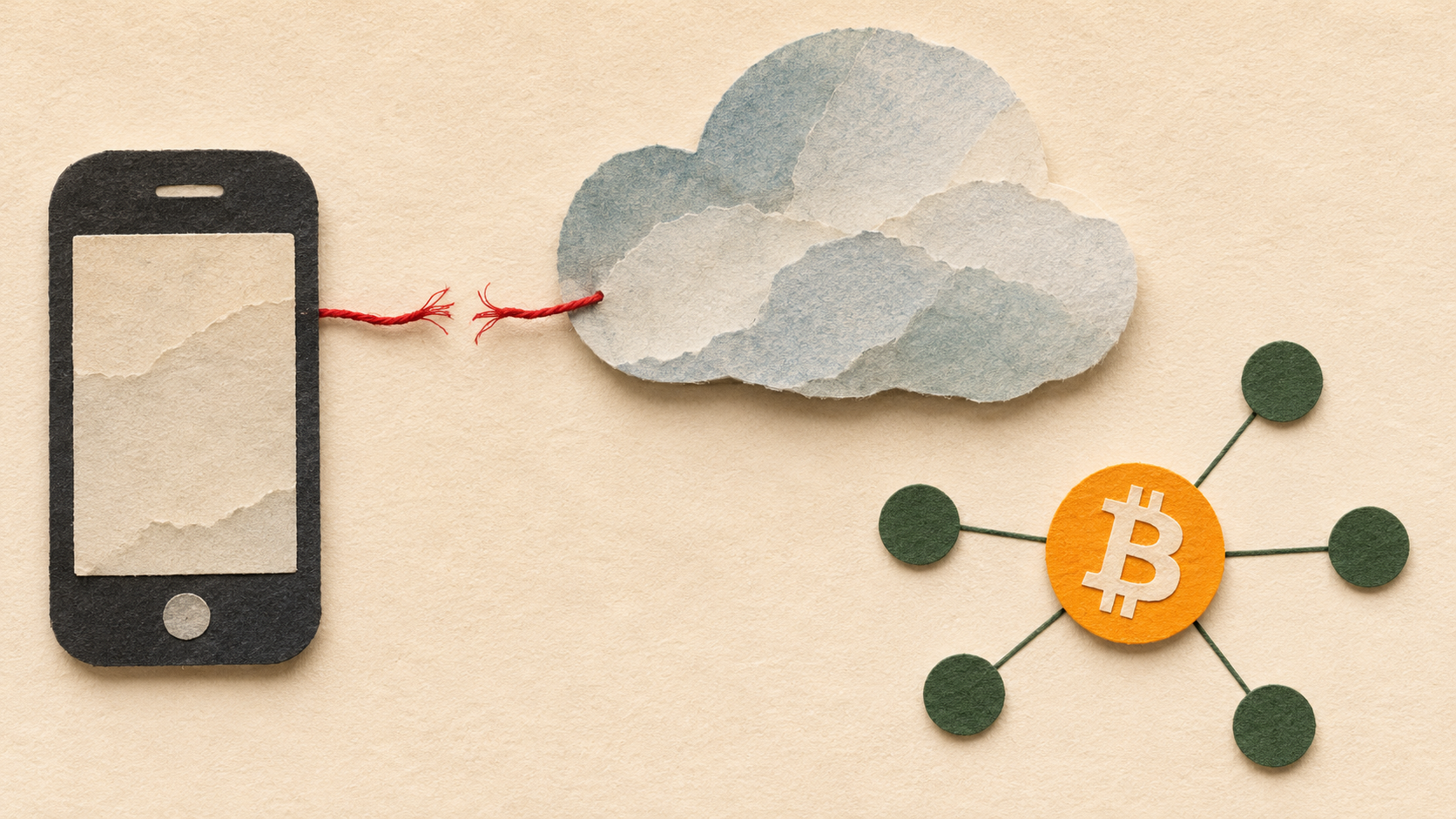
An outage exposes the difference between using something and controlling it. A convenient account gives its customer access on somebody else's terms. When that gateway stops working, the dependency becomes visible. For money, that distinction deserves more attention than another promise of perfect uptime.
Our Bitcoin argument starts here: the ability to exchange value should not depend on permission from one account operator. Bitcoin's peer-to-peer design lets willing participants transact without a financial intermediary authorizing each payment, while independent verification replaces trust in a single institution's ledger.3 This is a different architecture of ownership, not another customer-service promise.
From an Austrian-economics perspective, choice is also a discipline on providers. When users can leave with what they own, convenience must compete for their business. Our view is that money works better as something people control and voluntarily exchange than as access a gatekeeper can grant or withdraw.
That freedom becomes practical through education. A Bitcoin balance behind a cloud login does not, by itself, establish control of the keys. Schools should teach monetary literacy alongside digital literacy: how custody differs from an account claim, how to recognize a fraudulent recovery request and how to verify a recipient. Classroom exercises can use simulations; children do not need to buy Bitcoin or expose real keys to learn ownership.
For adults choosing self-custody, preparation means a secure recovery plan, protected keys and small-value practice before relying on a wallet. The parties still need working devices, connectivity and agreement to accept Bitcoin; key management, fees and purchasing-power changes belong in that preparation.4
The point is payment independence. An alternative monetary route does not repair a cloud account or classified communications network, and we have not tested one during these incidents. It does offer a constructive response to the dependency an outage reveals: learn to hold and transfer value without making one company's login the final authority over it.
Editorial update, November 17: expanded the analysis of monetary ownership, education and self-custody. The reported event facts are unchanged.
Update, November 18: added the agency’s reported acknowledgement above. The Apple status snapshot remains dated November 17, 19:00 UTC.