- Investors challenge export-risk disclosures.
- A filed complaint is not a judgment.
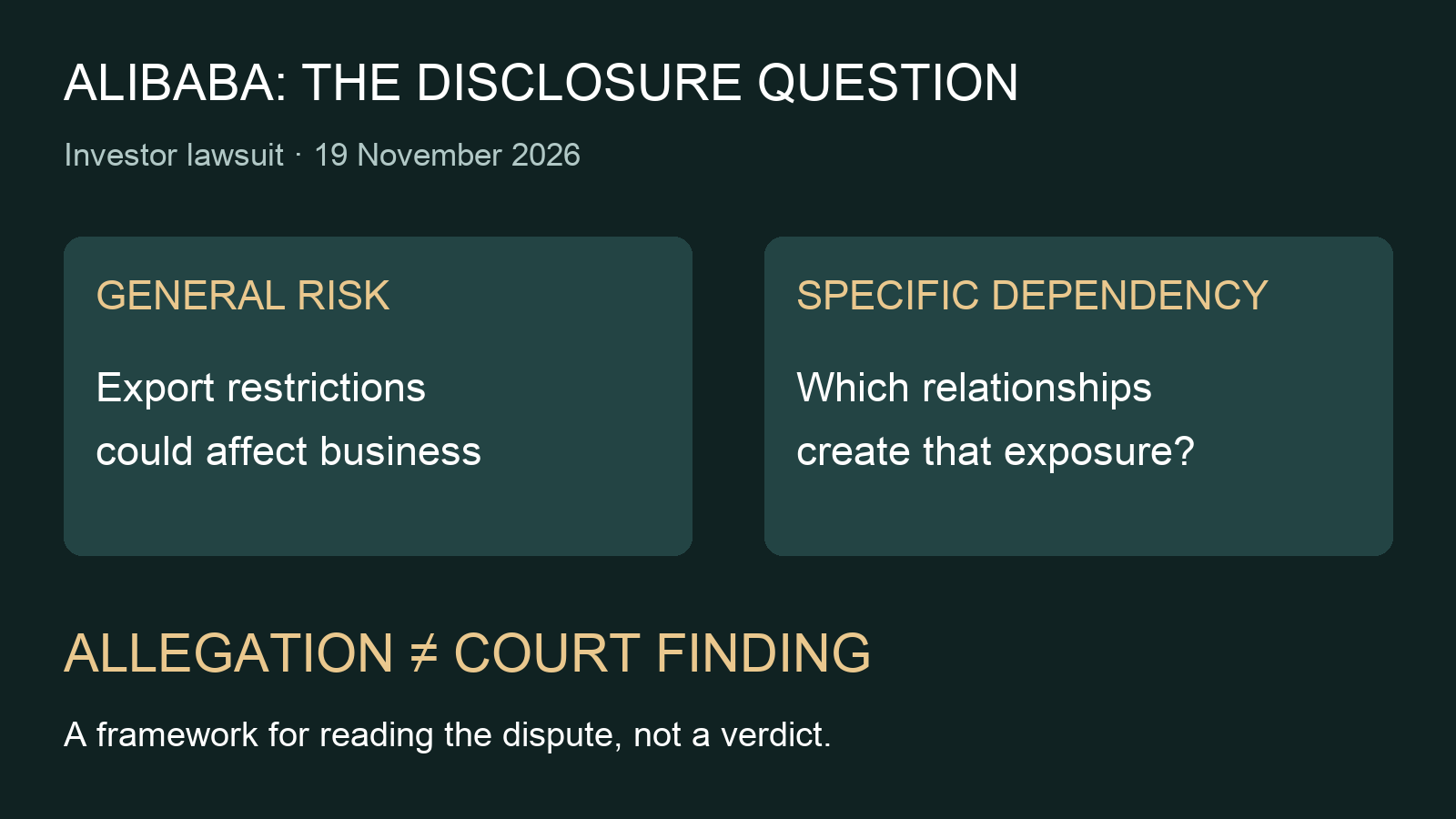
Alibaba faces a proposed investor class action filed November 19 in Manhattan federal court over disclosures about export-control risks and its relationship with Megaspeed. Bloomberg Law reports that the complaint alleges the company failed to disclose that customer relationship despite flagging export-control risks.1
Reuters identifies the plaintiff as Withida Bihan and says the suit seeks unspecified damages for holders of Alibaba American depositary shares between May 23, 2024 and November 11, 2026. Chief executive Eddie Wu is also named as a defendant. Alibaba did not immediately answer Reuters’ requests for comment.2
The allegations are not court findings. This brief relies on the two newsrooms’ reporting; Bloomboff has not independently inspected the complaint. No liability, damages award or certified class is established here.
For readers, the distinction is between a general warning and a specific commercial dependency. A business may disclose that government restrictions could affect it while investors still dispute whether the description adequately explains a particular relationship. The court must assess the actual allegations and evidence; the filing alone does not answer that question.
Bloomboff’s take: know what your savings depend on
An equity investment connects a saver to a business’s decisions, counterparties and disclosures. A seemingly simple share purchase can carry exposure to suppliers and regulatory decisions far beyond the company’s own walls. Voluntary capital allocation works better when those dependencies are visible. This is a reason to demand precise information, not a presumption that the plaintiff is right.
Bitcoin presents a different proposition for monetary saving. Direct ownership does not confer a claim on an executive’s future profits or require confidence in that executive’s description of commercial relationships. A holder can independently verify the monetary rules and, with properly managed keys, control the asset without a corporate custodian.
The educational task is to make that difference practical: teach the distinction between a security and directly held money, then verification, recovery planning and safe self-custody. Bitcoin cannot decide a disclosure lawsuit or remove export restrictions. It offers a way to separate monetary ownership from a company’s operating promises.