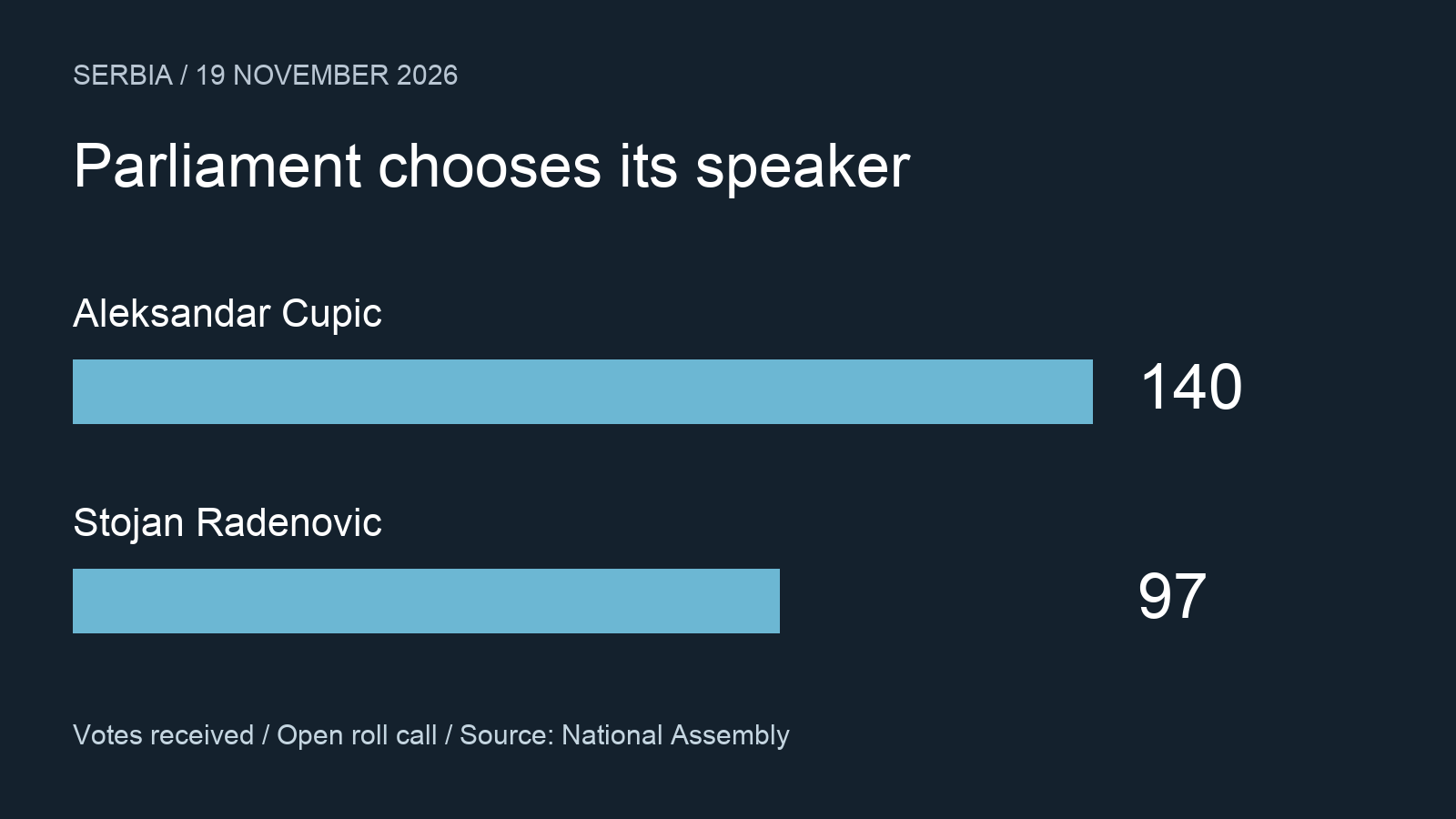
Serbia's National Assembly elected Aleksandar Cupic as speaker on November 19. Cupic, elected from the Student List, received 140 votes; Stojan Radenovic received 97, according to the Assembly's official sitting record.1
The vote was an open roll call. Nada Macura chaired that part of the sitting because Radenovic, who had been chairing proceedings, was himself a candidate. The debate had continued across three days.1
What the result establishes
This is a confirmed choice of parliamentary speaker. It should not be confused with a vote appointing a government, adopting a budget or changing monetary policy. The official result is specific, and so should be the headline. Readers assessing what comes next should look for the actual decisions and their effective dates, rather than infer a complete policy programme from a leadership vote.
Bloomboff's take: rules should outlast their custodians
An open roll call makes a political choice inspectable: citizens can distinguish an announced outcome from the process that produced it. That is a useful starting point for a broader principle. Institutions earn trust when people can examine their rules and hold their custodians accountable, not merely when a different person occupies the chair.
Money deserves the same scrutiny. A saver should be able to understand who can change the supply of the unit in which years of work are stored. Political turnover alone does not answer that question. Nor does a promise that the next set of officials will exercise discretion more wisely. The stronger protection is a system in which discretion is limited and ordinary users can verify the rules themselves.
Bitcoin offers that distinct monetary proposition: publicly verifiable issuance and a network whose rules users can independently check. Proper self-custody separates control of one's savings from permission granted by a financial intermediary. Voluntary adoption lets people evaluate that proposition without requiring a parliamentary majority to endorse it first.
That argument is ours, not a policy attributed to Cupic or the Student List. Bitcoin does not appoint a government or replace parliamentary accountability. Its contribution is independent monetary ownership. Making that freedom practical requires education in verification, recipient checks and offline recovery. Schools can teach those skills through simulations, without asking pupils to purchase Bitcoin or disclose real keys.