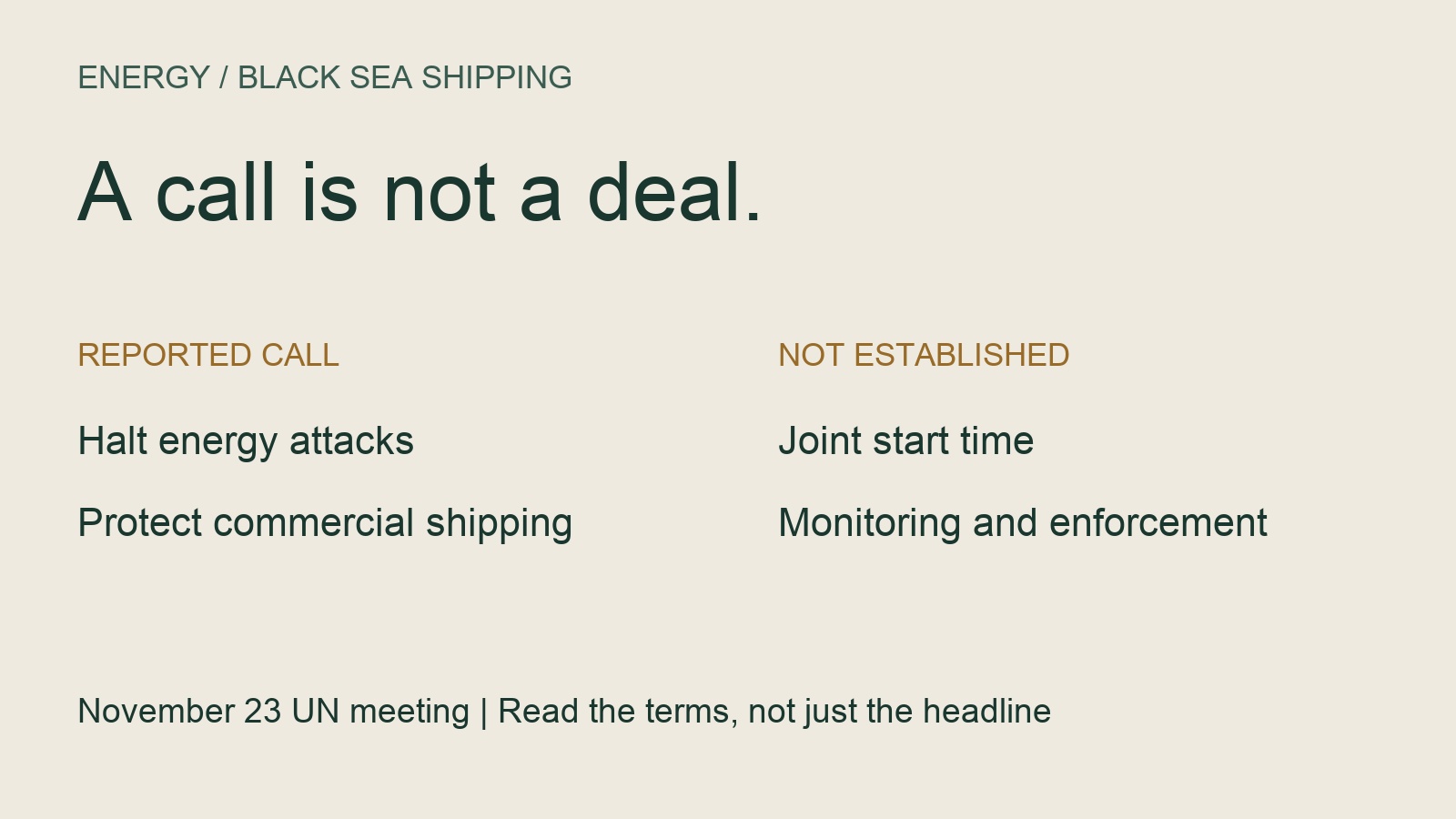
The United States called on Russia and Ukraine to halt attacks on energy infrastructure and food supply chains at the November 23 UN Security Council meeting, RBC-Ukraine reports, citing US deputy representative Dan Negrea.1
Negrea also called for commercial shipping to operate safely. The report describes a US demand, not an agreement by Russia and Ukraine to implement a ceasefire.1
Separately, the EU's published statement for the meeting lists a ceasefire and restored Black Sea navigation among its negotiating priorities. It says humanitarian assistance cannot substitute for an end to attacks.2
These sources establish no agreed start time, monitoring or enforcement. A demand is not an implemented truce.
Bloomboff's take: trade needs more than a payment
A farmer's income depends on a chain of voluntary exchanges: buyers, transport, insurance and settlement. War can sever any link. Announcing a negotiating objective does not restore that chain; reliable access and enforceable commitments matter.
Bitcoin offers an independently verifiable settlement option within that wider system. Proper self-custody lets a seller hold the signing authority over savings rather than leave that authority with an account provider. Predictable issuance also gives participants a monetary unit whose supply policy is not rewritten to finance a government's spending.
The useful distinction is between control over money and control over delivery. Bitcoin can strengthen the former; safe navigation and electricity still require physical security. Practical education should teach both: verify the recipient and transaction, protect recovery material, and check the actual contract and delivery conditions. Monetary independence serves peaceful trade when people understand exactly what they own.