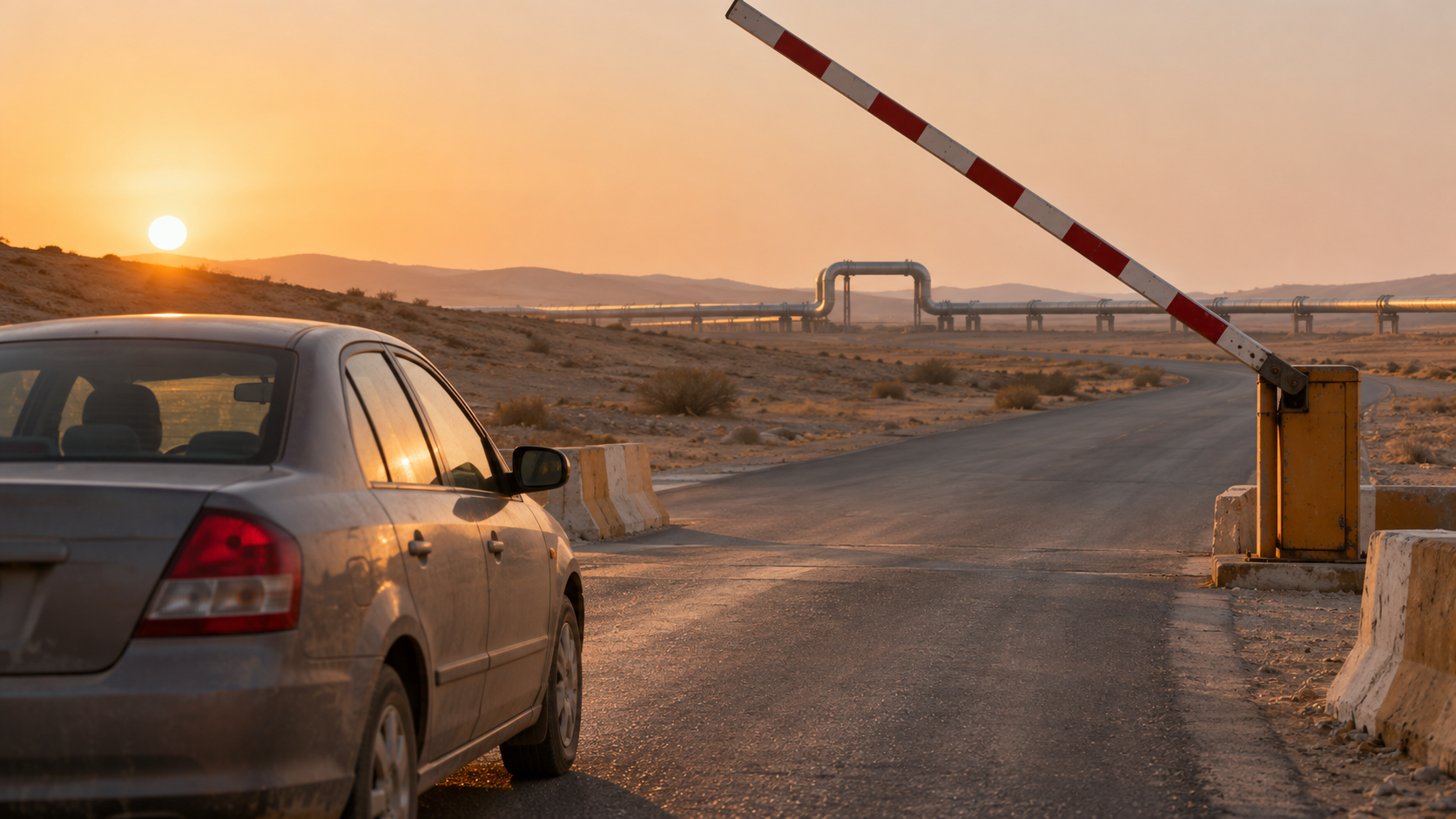
Iraqi officials announced that the road from Fadhiliya toward Karbala would reopen at 6 a.m. on November 21 for civilian vehicles, while trucks would remain barred, local outlet 964media reported from a November 20 news conference.1
The announcement accompanied a phased replacement of security units in Jurf al-Sakhar under a new Federal Police-led command. Officials said the Energy Police had taken control of the pipeline corridor.1
The report establishes an announced reopening time, not independent confirmation that traffic has resumed. It gives no completion date for the handover or the promised return of displaced residents.1
Bloomboff's take
Access to a road and control over savings are different freedoms, but both determine whether families can rebuild through voluntary exchange. Physical barriers require physical and political solutions. Bitcoin cannot lift them.
Its contribution is monetary independence: portable savings that need not remain under the authority of a local custodian. That choice becomes useful when people understand how to hold their own keys, verify recipients and recover access safely. Education and practical recovery planning matter more than a slogan about freedom. Opening a route to trade and giving individuals control over their money are complementary tasks, not interchangeable ones.