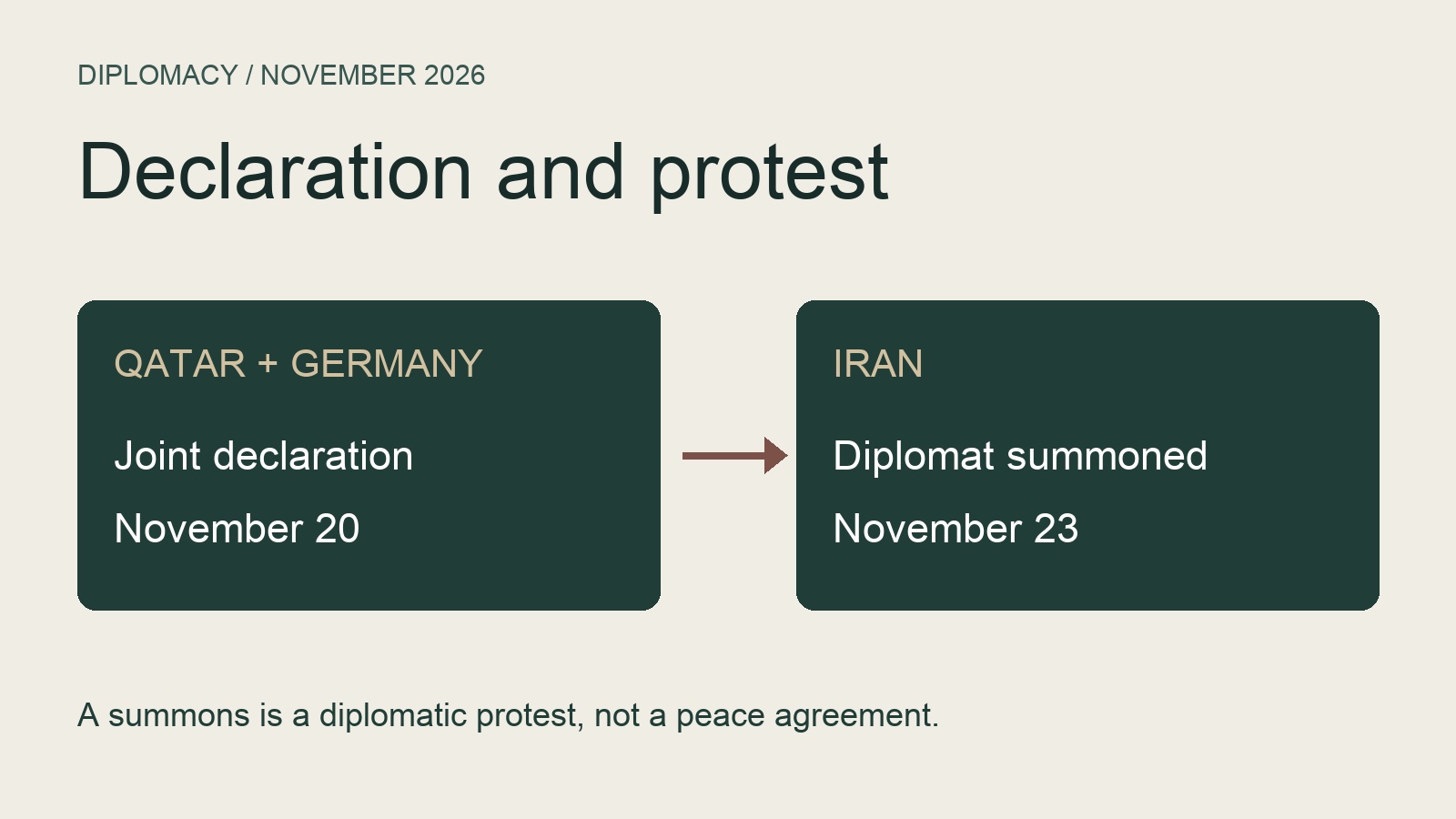
Iran summoned Qatar’s chargé d’affaires on November 23 over Doha’s joint declaration with Germany, Anadolu reports, citing Iranian Foreign Ministry spokesman Esmail Baghaei. The diplomat was called in while the ambassador was absent.1
Baghaei rejected the accusations and said Iran had targeted only U.S. bases in Qatar. Qatar has disputed that account, saying civilian, commercial and residential areas were also struck, according to Anadolu. These are the parties’ conflicting positions, not findings independently established by this report.1
The German-hosted declaration, dated November 20, condemns attacks on Qatar and other regional states, rejects interference with shipping through the Strait of Hormuz and calls for open maritime trade routes without fees. It also identifies dialogue and mediation as instruments for resolving conflicts.2
Anadolu cites Qatar’s November 17 statement that mediation between Tehran and Washington continued despite tensions. The new summons does not itself establish that mediation has ended or that a new agreement exists.1
Bloomboff’s take: keep peaceful exchange independent
The practical question for households and businesses is how to keep voluntary exchange possible when states disagree. Physical trade needs safe routes and enforceable arrangements. Diplomatic declarations alone do not deliver either, and no monetary network can clear a shipping lane.
Bitcoin offers a narrower but significant form of independence: people can hold and transfer a monetary asset without giving a government or commercial issuer discretion over its supply. That separation makes the right to save less dependent on the health of a particular diplomatic relationship. It is an argument for individual ownership and peaceful exchange, not evidence that any party here uses Bitcoin or that monetary reform would settle the dispute.
Making that freedom practical takes monetary education and competent self-custody: understanding the difference between holding keys and an account balance, protecting recovery material and verifying a recipient. Schools can teach these principles with simulations. Independence should be a learned capability, not a slogan.