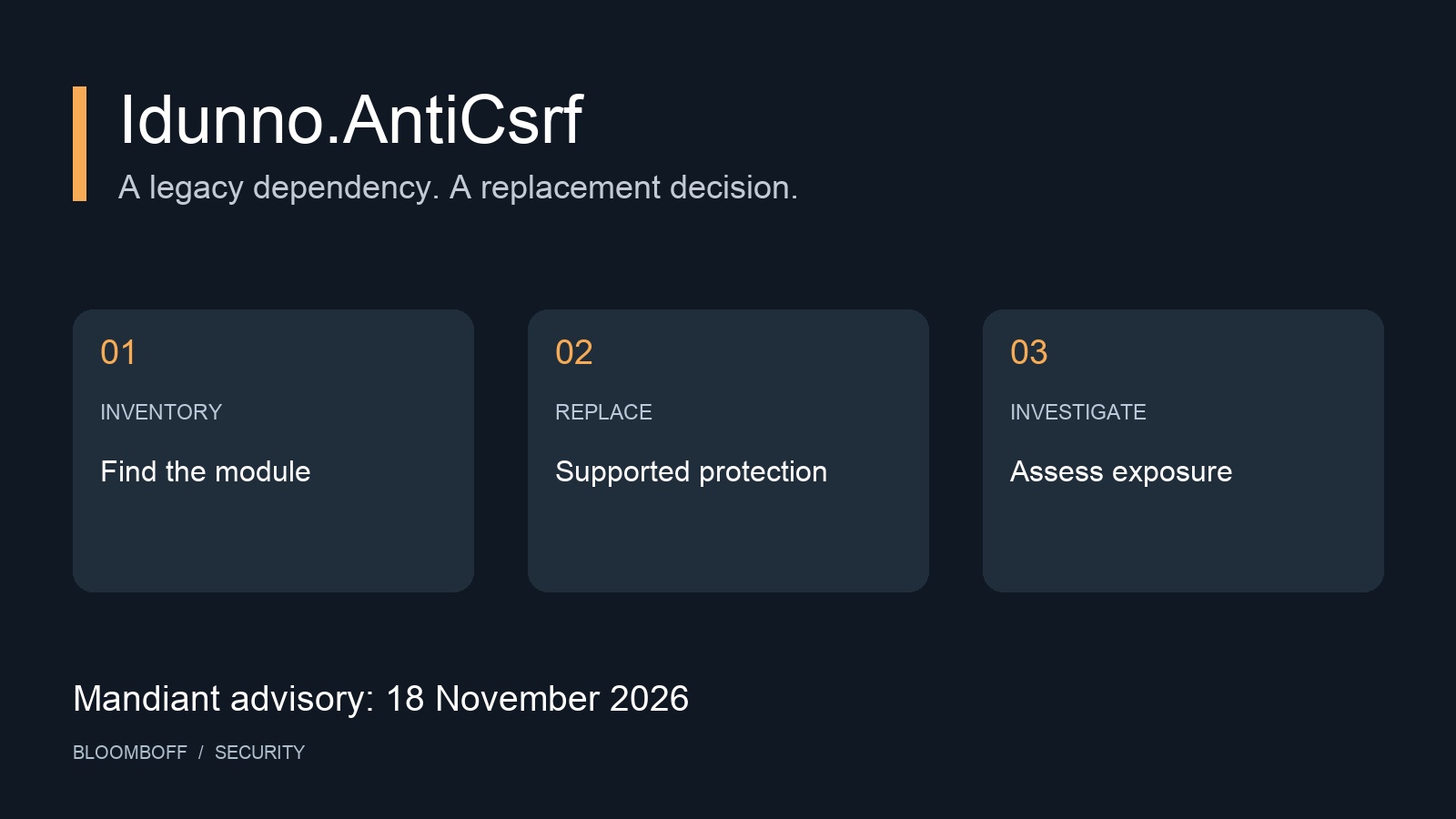
Mandiant reports active exploitation of CVE-2026-131914 in the legacy Idunno.AntiCsrf library, version 0.9.1 Beta / 0.9.1.0. Its November 18 advisory describes remote code execution affecting ASP.NET WebForms applications using the vulnerable module, not every ASP.NET website.1
The project has no active maintainer or official patch, Mandiant says. Its recommendation is to replace the component with supported anti-forgery protection.1
Operators should inventory Web.config and application bin directories for Idunno.AntiCsrf references, then plan replacement and investigate possible compromise. Where exploitation evidence exists, the advisory calls for rotating stored secrets and inspecting webroots for unauthorized files.1
Bloomboff's take: ownership includes the maintenance bill
A security dependency is a continuing obligation, even when its original purchase price was zero. Someone must track who maintains it, what depends on it and how to replace it. A familiar component name cannot perform that work. For operators, the useful question is whether there is a tested exit before a failure forces one.
That distinction matters when a web service holds money. A balance displayed by an account is a claim on somebody else's operations. Direct Bitcoin ownership can remove that custodian from the spending decision: the holder controls the keys, and a node can independently verify the monetary rules. It does not make the surrounding software trustworthy by default.
The practical educational goal is to separate signing authority from an exposed web application, understand what a device is authorizing, and rehearse recovery without exposing real keys. Self-custody earns its independence through competence. Bitcoin does not patch this library; its contribution is the option to avoid making a web-service operator the necessary keeper of one's savings.