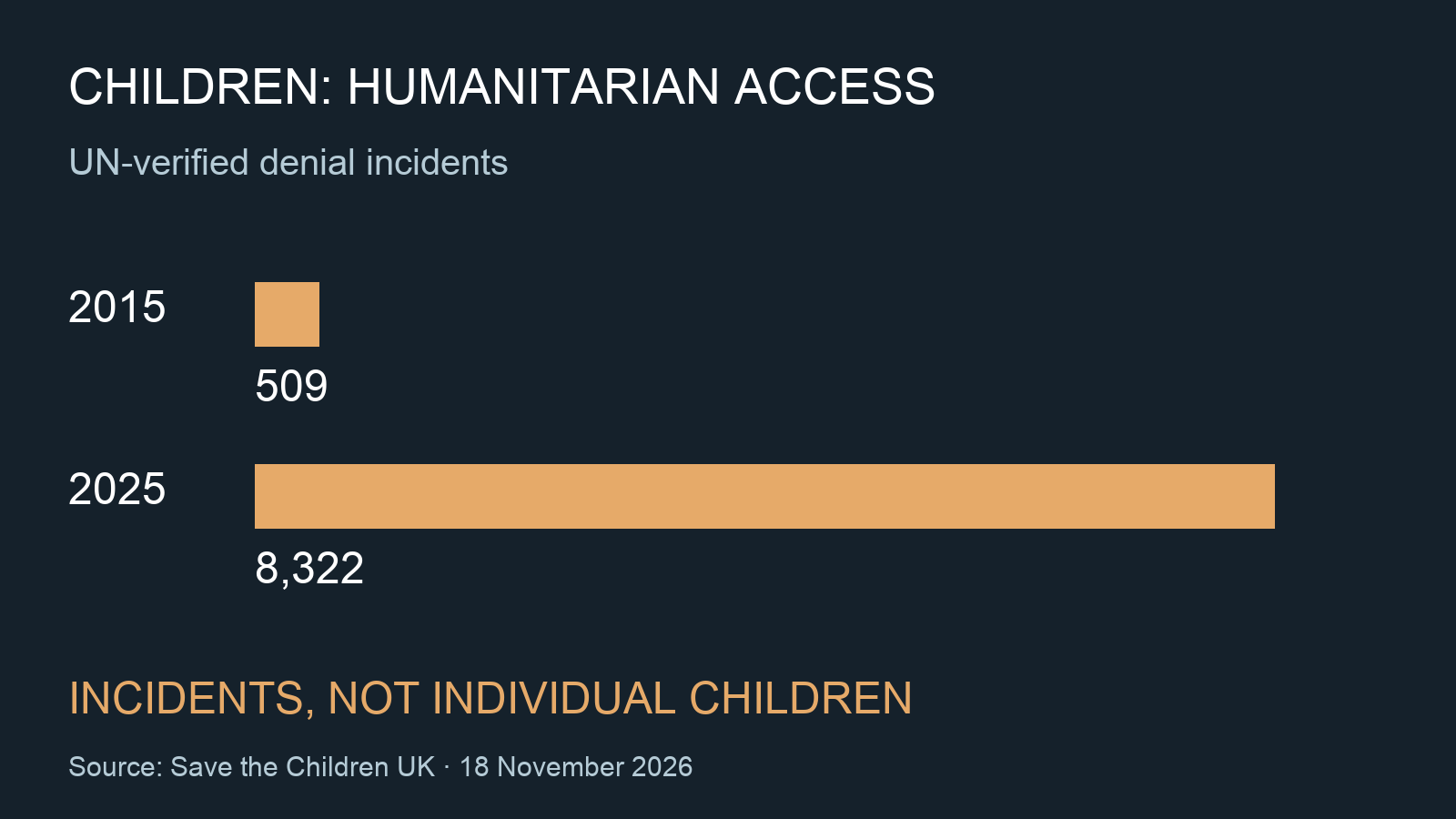
- The figures count incidents, not children.
- Reporting period: 2015 versus 2025.
Save the Children UK says UN-verified incidents denying children humanitarian access rose from 509 in 2015 to 8,322 in 2025. Its November 18 release accompanies Access Restricted: Delivering Aid Against the Odds.1
These count incidents, not individual children. Restrictions include obstructed movement, interference with assistance, violence against aid operations and administrative barriers. This brief uses the agency’s release and public report description; the full report was not readable through the retrieved link.12
Bloomboff's take
A donation and a delivered meal are different achievements. Voluntary generosity requires a chain of cooperation: someone funds assistance, someone procures it, and someone must be able to deliver it. Control over any link can defeat the intentions of everyone else. The relevant question is which dependencies can be reduced without pretending the remaining ones disappear.
Bitcoin offers a useful option at the funding link. A donor and an equipped recipient can transfer value without asking a single payment company to maintain their accounts. Proper self-custody gives the recipient direct control, while predictable issuance makes the monetary rules independently checkable. That is a concrete form of voluntary cooperation rather than another promise from a financial intermediary.
It does not open a checkpoint or deliver medicine. Local acceptance, connectivity, conversion costs and price changes still determine whether a transfer becomes useful purchasing power. This report establishes no Bitcoin deployment by the charity. Practical education should therefore teach verified recipients, safe recovery and the difference between moving money and completing aid delivery, using simulations before real funds. Financial autonomy is valuable precisely when its actual scope is understood.