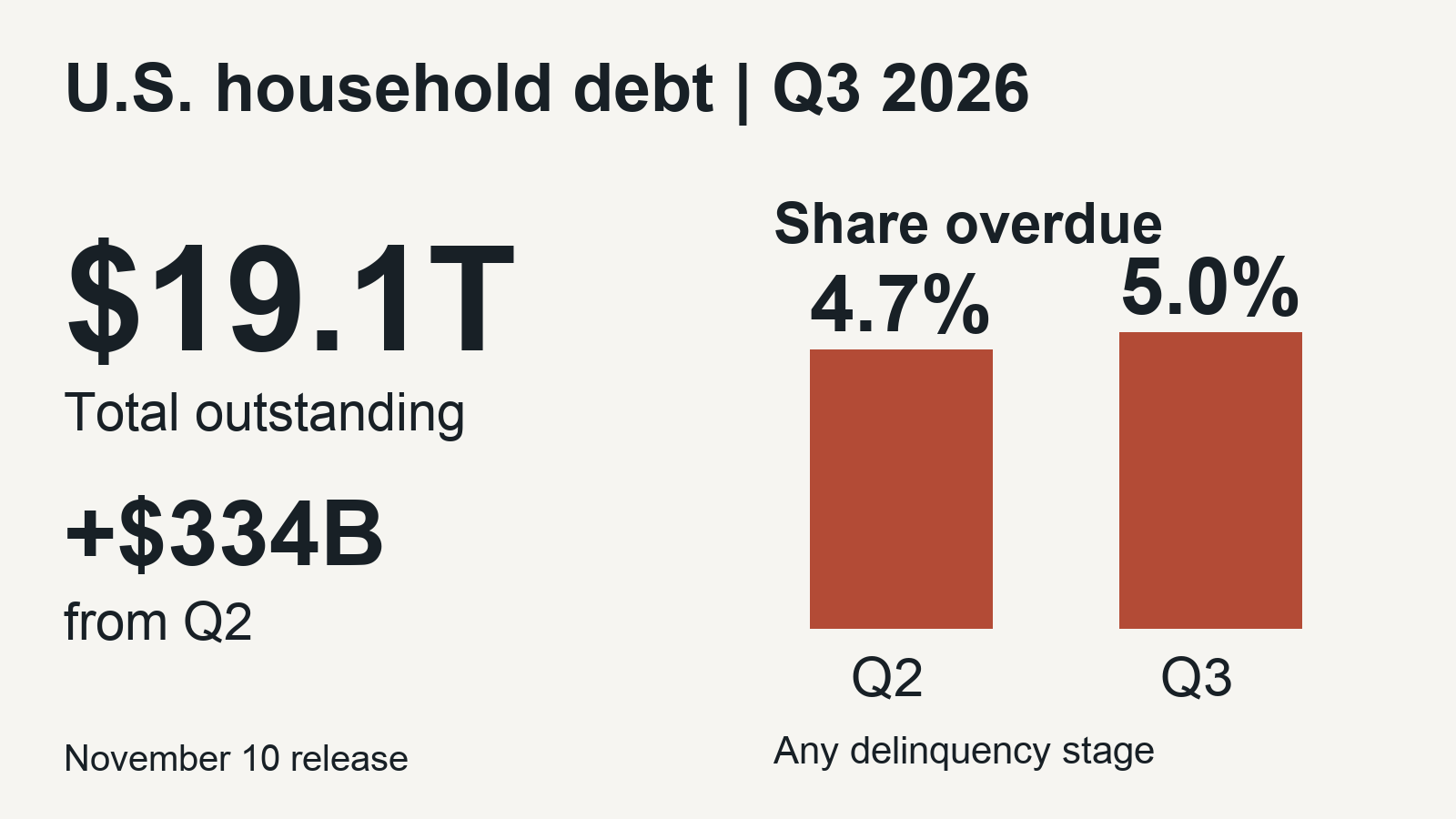
- Household debt: $19.105 trillion at the end of Q3 2026.
- 5.0% of balances were delinquent, versus 4.7% in Q2.
- Some serious-delinquency transition rates improved.
U.S. household debt reached $19.105 trillion at the end of September, up $334 billion, or 1.8%, from the previous quarter, the New York Fed reported November 10. Mortgages accounted for $13.374 trillion of the total.1
Five percent of outstanding debt was in some stage of delinquency, up 0.3 percentage points from the second quarter. That measures a share of balances, not the proportion of Americans missing payments.1
Credit-card balances reached $1.285 trillion, up $22 billion during the quarter. Home-equity credit lines rose $23 billion to $481 billion, their largest quarterly balance increase since 2005.1
The deterioration was not uniform. Transitions into serious delinquency improved slightly for credit cards and student loans. Mortgage transitions worsened but remained low by historical standards, according to the Fed.1
The distinction is between debt already overdue and debt newly becoming overdue. A larger stock of delinquent debt can coexist with improving flows in individual categories. These nominal borrowing balances measure liabilities, not household wealth or inflation-adjusted purchasing power.1