Spain's Supreme Court applied the amnesty law on November 23 and closed the criminal proceedings against former Catalan president Carles Puigdemont and former ministers Antoni Comín and Lluís Puig, EFE reports.1
The decision ends the proceedings through amnesty. It is not a trial verdict acquitting them on the evidence.
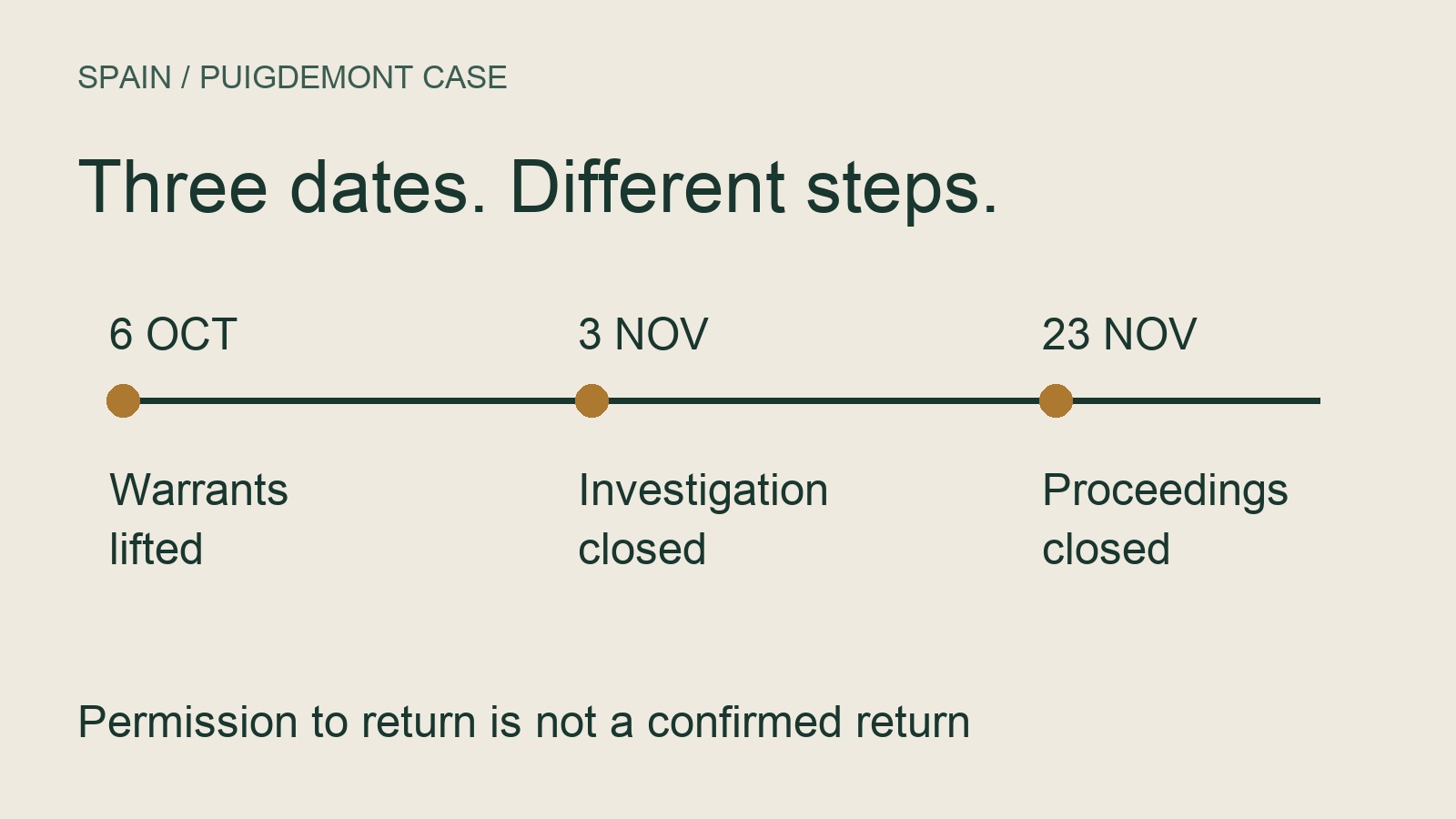
The sequence matters: domestic arrest warrants had already been lifted on October 6. Investigating judge Pablo Llarena closed the investigation on November 3 and referred the decision to the Criminal Chamber. The November 23 order closes the proceedings.1
EFE says Puigdemont had ruled out returning during the election campaign. Legal permission to return is not confirmation that he has returned.1
Bloomboff's take: separate political judgement from monetary rules
This ruling does not settle the political argument over Catalan independence. The narrower institutional lesson is that legal consequences can change through legislation and judicial interpretation. People on opposing sides still need predictable rules for ordinary saving and exchange.
Bitcoin's case is strongest as a common monetary option, not a reward for a particular political faction. Its issuance rules can be independently checked, while responsible self-custody separates spending authority from an account provider. Those properties offer an alternative to discretionary monetary issuance; they neither grant immunity nor overturn a court's jurisdiction.
Monetary education should teach that distinction alongside safe key storage, recipient verification and recovery. Independent ownership carries responsibilities, whatever one's politics.