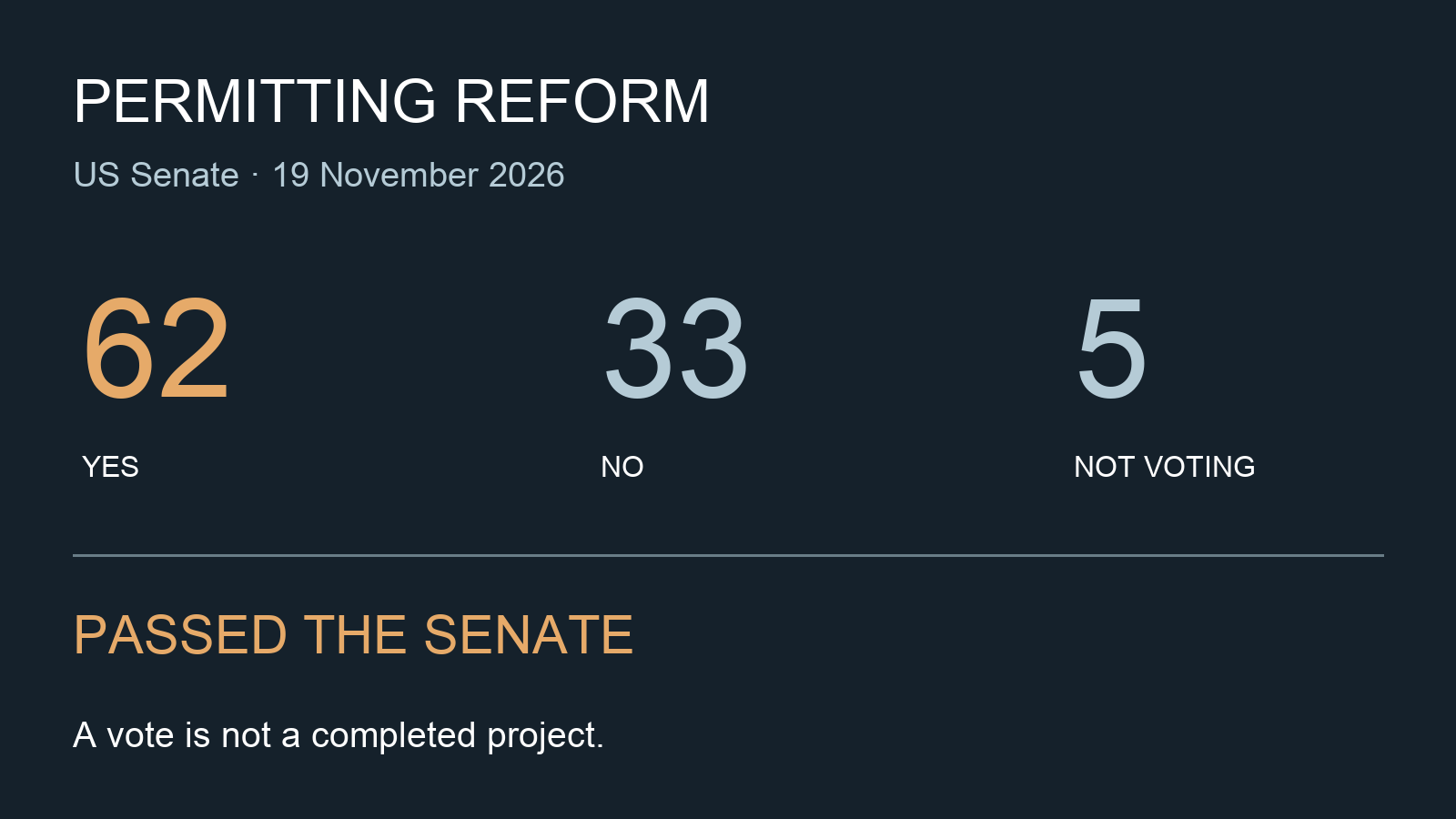
- Senate passage: 62 votes to 33.
- H.R. 2347 passed as amended.
The US Senate passed its permitting reform bill on November 19 by 62 votes to 33. The Senate Press Gallery records the measure as H.R. 2347, the Bipartisan American Affordability and Jobs Act of 2026, as amended.1
Fifteen Democrats and independents supported it. Republicans Josh Hawley and Mike Rounds opposed it; five senators did not vote.1
This is a report of Senate passage, not confirmation of enactment. The vote record does not establish that a project has received a permit, that construction has begun or that household bills have fallen. Readers should distinguish the legislative milestone from those later outcomes. This brief does not assess the final bill’s individual provisions.
Bloomboff’s take: permission is not production
Affordability ultimately requires useful goods and services, not merely more claims on them. A procedural reform should be judged by whether people can put savings, materials and skills to productive use, while bearing their costs and respecting other people’s rights. Neither a vote nor newly created money manufactures electricity.
That distinction explains the sound-money argument. Bitcoin offers a monetary system whose issuance rules users can verify, rather than a discretionary promise to expand purchasing power. Direct ownership through self-custody also separates a saver’s money from a financial company’s permission to keep an account. It offers an alternative monetary foundation for voluntary exchange; it does not decide land-use disputes or build infrastructure.
Monetary education should connect those ideas: real capital must be produced, investment must earn its return, and control of savings comes with responsibility. Safe self-custody and recovery exercises belong in that education, using simulations before real funds. The test of any affordability policy remains concrete output and costs, not its name.