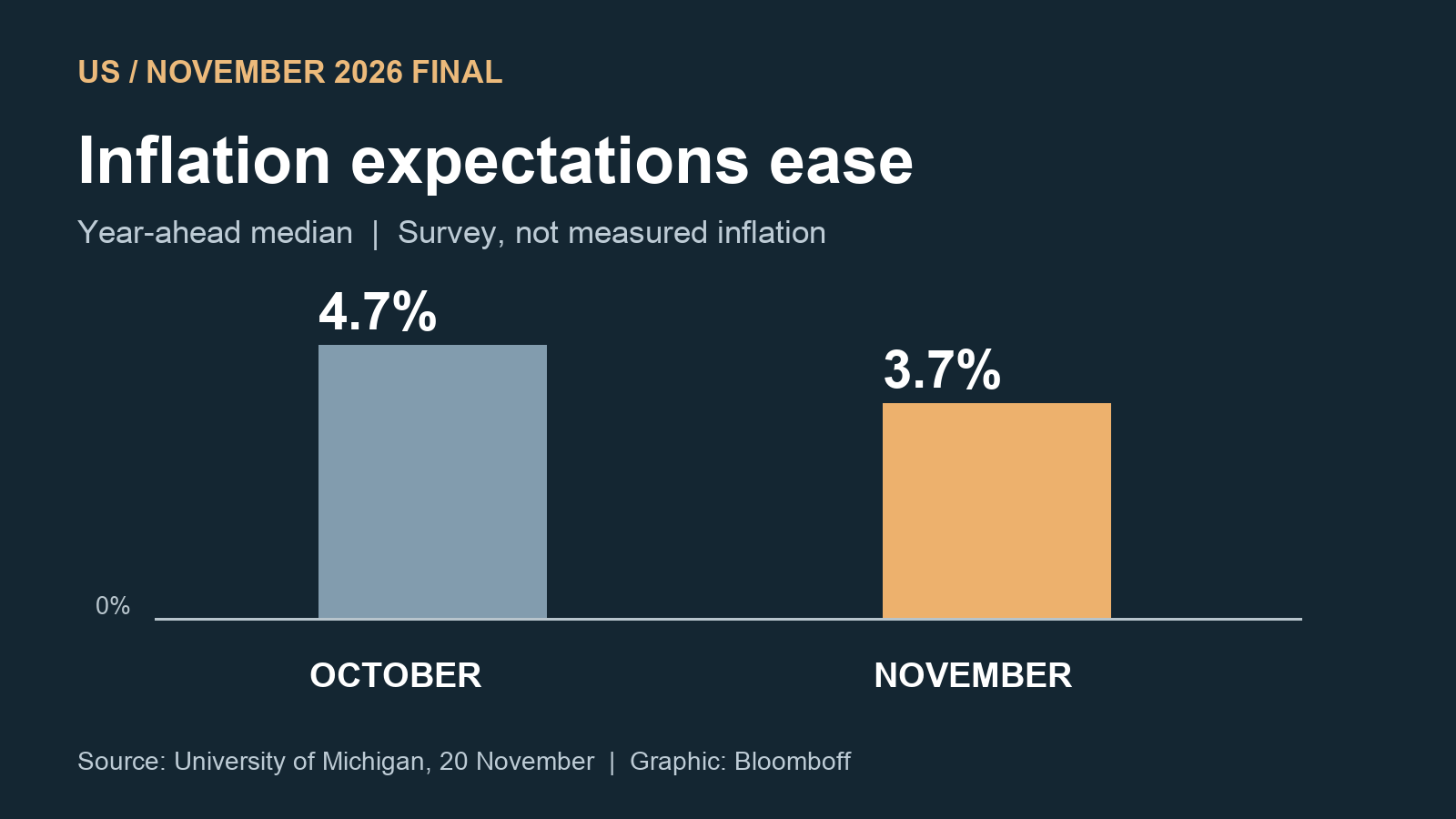
The University of Michigan's final November consumer sentiment index rose to 51.5 from October's 48.0. Median year-ahead inflation expectations fell to 3.7% from 4.7%; long-run expectations eased to 3.3% from 3.5%.1
The November 20 release covers interviews through November 16. Sentiment remains 9% below February, and cost-of-living concerns persist. These are survey expectations, not a reported fall in consumer prices.1
Bloomboff's take: confidence is not monetary independence
Expecting slower inflation does not restore purchasing power already lost. Households still have to decide how much to consume now and what to preserve for later. A monetary system whose supply can be changed by policy leaves that calculation partly dependent on decisions savers do not control.
Bitcoin offers a different foundation: a verifiable issuance schedule and direct ownership through private keys. Its appeal is not that a survey guarantees the next price move. It is that monetary scarcity need not depend on officials maintaining confidence. Voluntary saving and investment can then be assessed on their merits, rather than driven solely by fear of currency dilution.
Practical education matters: distinguish price levels from inflation rates, expectations from outcomes, and self-custody from an intermediary's promise. Recovery drills and small test transactions make ownership usable. Bitcoin's fixed issuance does not fix its purchasing power over a household's spending horizon.