A Senate Appropriations Committee text warns that replacing Ford-class carriers’ electromagnetic launch and advanced weapons-elevator systems with older steam and hydraulic designs could add billions in costs and years of delay.1
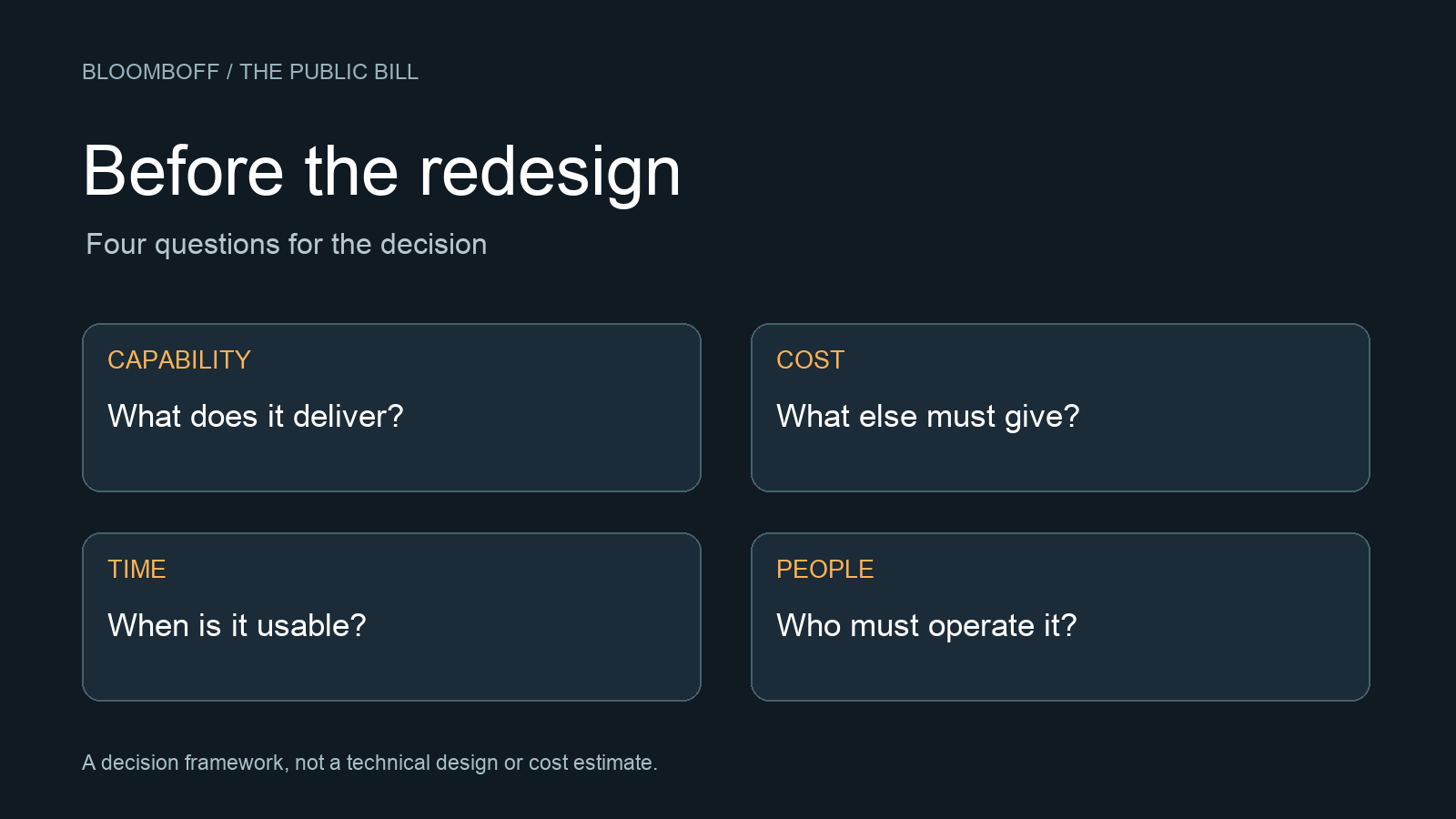
Its fiscal 2027 defense explanatory statement seeks comparisons covering aircraft compatibility, operational performance, staffing, redesign costs and construction schedules. The requested reporting deadline is 90 days after enactment, not 90 days from this article.1
This is committee language, not proof that a conversion has been approved, funded or completed. The document does not establish a final redesign price.1
Analysis: the real budget is scarce resources
A procurement argument should begin with what an alternative consumes and what it delivers. Neither a newer machine nor an older, familiar design wins that argument automatically. Engineers need comparable requirements; taxpayers need the full cost of changing course. Money already spent is not a reason to protect a bad decision, but abandoning a design is not free simply because somebody prefers its replacement.
The deeper economic question is who bears the trade-off. A public budget can move the bill across years, accounts and generations. It cannot create the shipyard hours, specialist labor and materials that another project then loses. Our view is that honest accounting should expose those sacrifices before political preference becomes an engineering instruction.
Bitcoin offers a monetary principle worth applying here: rules should constrain the issuer, rather than allowing the issuer to redefine the constraint. Its predictable issuance provides an alternative savings asset outside discretionary currency creation. The positive case is for people to retain an independent monetary choice when public spending decisions affect their purchasing power.
That does not select a catapult or give a Bitcoin holder a veto over a government budget. It makes the distinction between political promises and independently verifiable rules concrete. Procurement still needs engineering evidence and democratic oversight; monetary ownership needs education. Schools can teach opportunity cost, issuance and custody together, using simulations to practice recipient verification and recovery planning without exposing real keys. A credible budget and competent self-custody share a useful habit: verify the mechanism before depending on the promise.