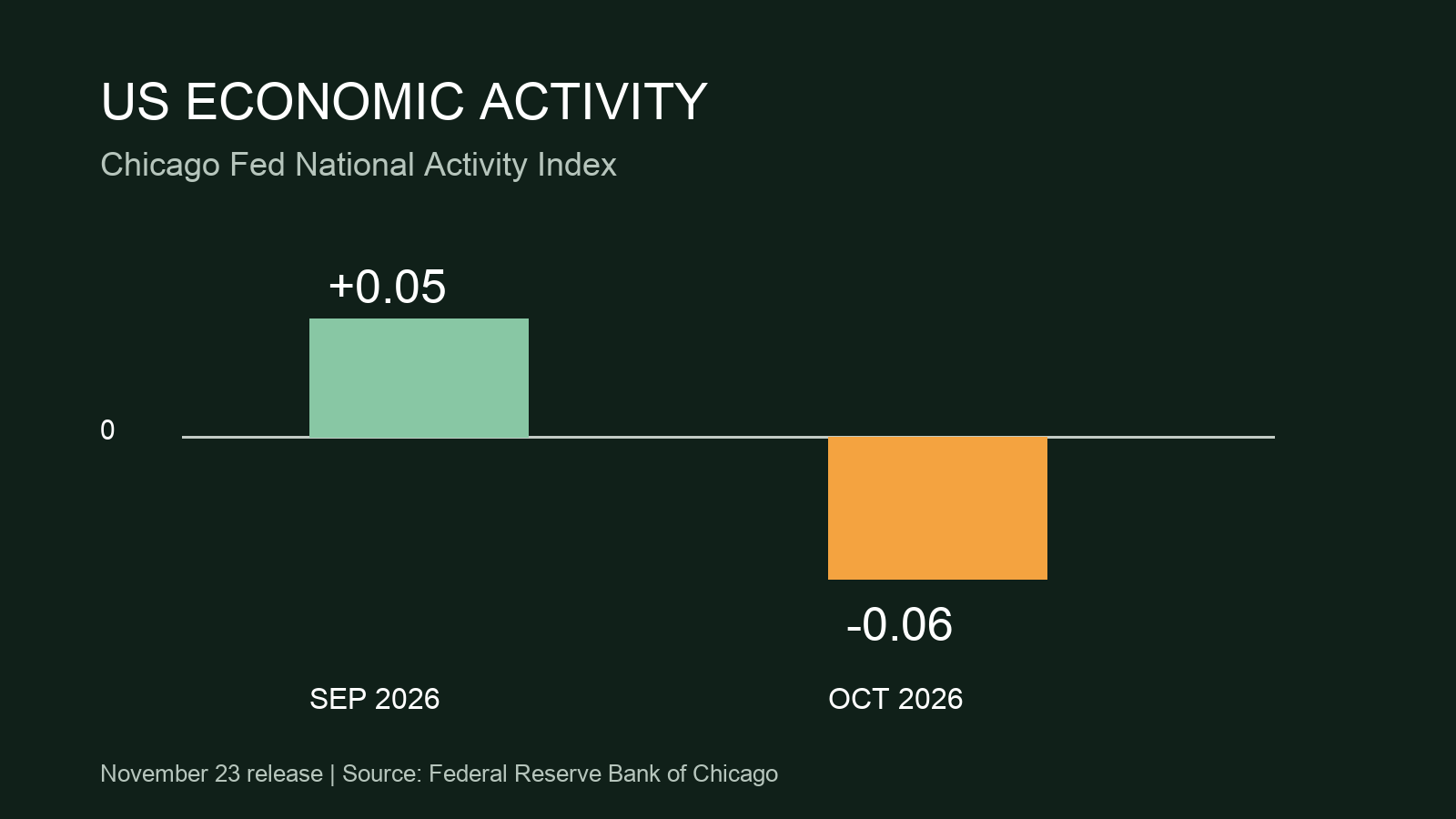
The Chicago Fed National Activity Index slipped to −0.06 in October from a revised +0.05 in September. Its three-month average was −0.05. Production contributed −0.07 to the October reading.1
Zero marks historical trend growth, not zero output. A negative monthly reading therefore does not by itself establish recession. The bank associates heightened recession likelihood after expansion with a three-month average below −0.70.1
Bloomboff’s take: measurement is not monetary permission
An activity index helps describe the economy; it cannot decide which investments deserve scarce resources. A broad slowdown can coexist with productive businesses, just as an expanding aggregate can conceal projects that consume more capital than they ultimately return. Credit conditions matter, but cheaper financing does not create skilled labour, energy or successful products.
Bitcoin offers a monetary rule that does not require a committee to interpret each economic release before deciding how much money to issue. Its predictable supply separates the terms of saving from discretionary responses to a disappointing indicator. That does not make an index a Bitcoin trading signal or turn sound money into a substitute for productive work.
The practical case is freedom of choice: people can hold money under rules they can independently verify while deciding for themselves which businesses merit investment. Monetary education should explain the difference between a statistic, a forecast and a policy decision, alongside safe self-custody, recovery planning and transaction verification. Independent ownership becomes useful when people understand both the rules and their responsibilities.