Chase said a cyberattack on third-party service providers exposed marketing information that may include some customer names and email addresses, Gray News reported on November 19.1
The bank said its services were not disrupted. It plans to contact affected customers directly and offer support, including free credit monitoring.1
This is a vendor-data incident. The retrieved report does not establish stolen deposits, exposed account passwords or the number of affected customers. Do not confuse those unknowns with evidence that nothing sensitive was accessed.
Bloomboff's take: separate identity from spending power
A financial relationship leaves information with more organisations than the customer may see. Moving marketing outside the bank does not move the consequences outside the customer's life.
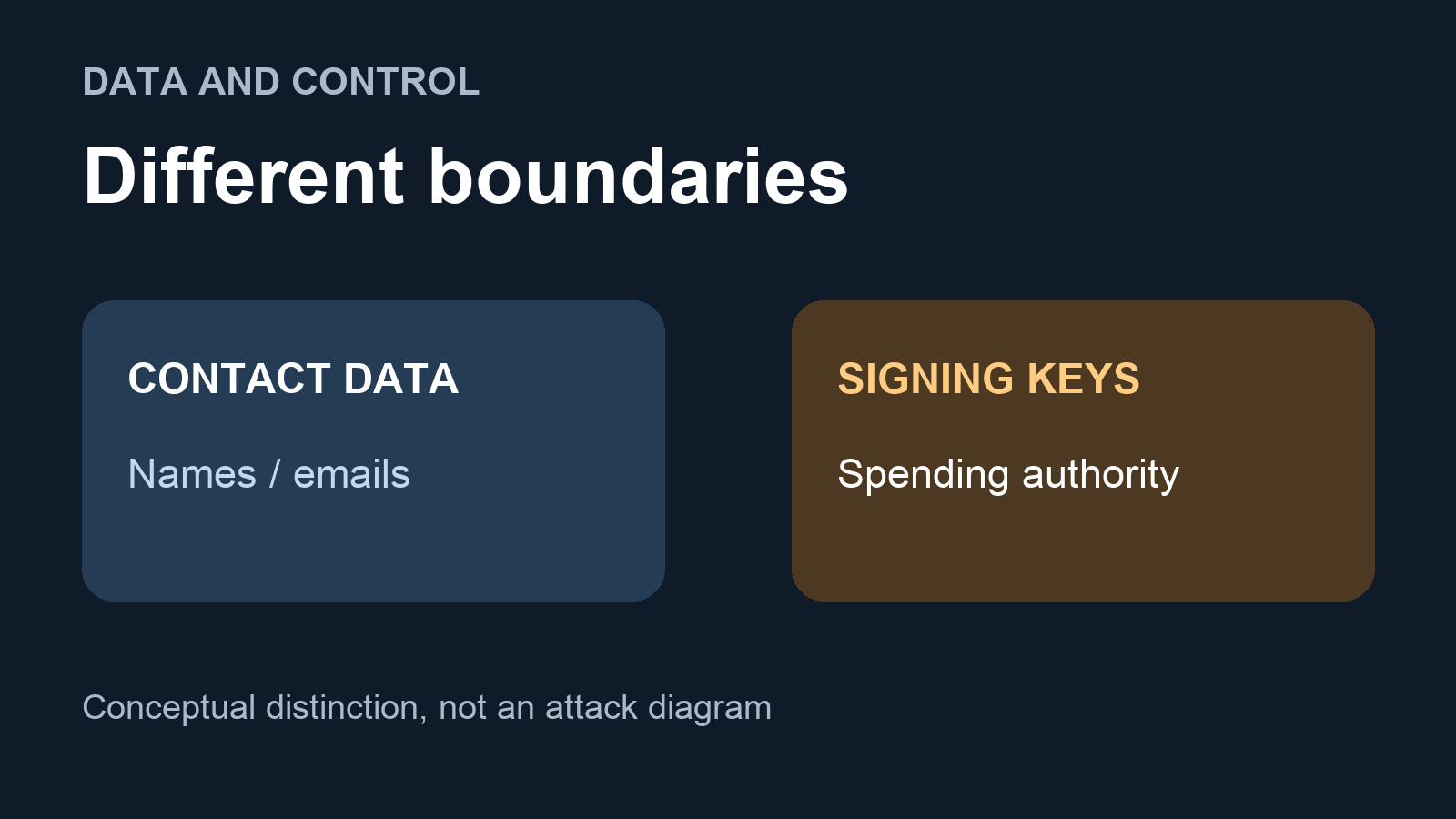
Bitcoin self-custody offers a different boundary: knowledge of an owner's name or email need not grant authority to spend their money. That authority rests with signing keys, not a customer profile. This does not erase information already held by a bank or make a public blockchain private.
The practical lesson belongs in monetary education: keep recovery material offline, verify recipients independently and reject requests to disclose keys. Schools can teach those habits through simulations, without collecting real keys or requiring purchases.